
How Starbucks Deep Brew AI Is Driving 30% Digital Sales Growth In China, India, Brazil, The US, And Japan: Outpacing McDonalds With Hyper-Personalization And Data Flywheels For 2025-2026
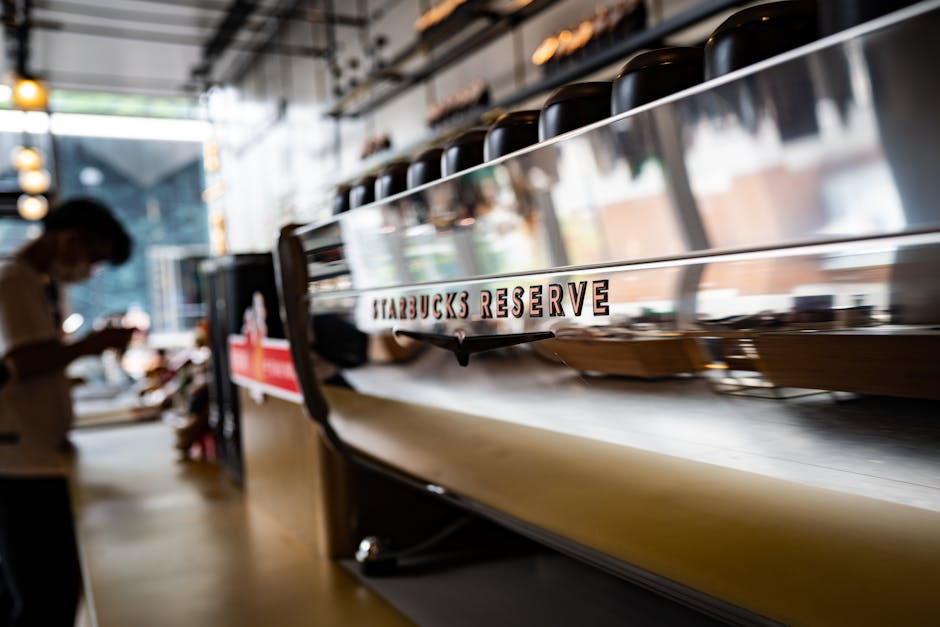
Deep Brew and the Art of AI-Driven Coffee: How Starbucks Reshaped the Quick-Service Landscape
In the past decade, the global coffeehouse market has witnessed a digital renaissance—none more transformative than Starbucks’ quiet but relentless evolution into a data-driven behemoth. As legacy brands like McDonald’s and Dunkin’ bet on scale and convenience, Starbucks leaned into a different playbook: fusing artificial intelligence, omnichannel presence, and nuanced cultural adaptation. This exposé unpacks how Starbucks’ Deep Brew AI platform has not only outpaced its storied rivals but is fundamentally rewriting the script for premium beverage experiences worldwide, using data as its most potent ingredient.
The Data Flywheel: Starbucks’ Secret Ingredient for Innovation
Historic Roots, Digital Ambitions. The Starbucks journey began in the 1970s with a focus on third-place community—a physical space for connection. By 2025, the company had quietly transitioned its core strength into the world’s largest vertically integrated digital café network, processing more than 100 million weekly transactions across 35,000+ stores. This magnitude of data unlocks capabilities that were once unthinkable, feeding a self-reinforcing “data flywheel” designed to drive continual growth.
AI at Scale, Not in Silos. Unlike its competitors who often segment digital innovation into isolated pilots or cohort-based tests, Starbucks’ Deep Brew platform operates across every store and customer touchpoint. This means every latte, every weather shift, and every local event becomes both an input and an opportunity for AI-driven personalization.
Pushing the Boundaries of Personalization
Hyper-Contextual Recommendations. Deep Brew leverages over 75 million unique customer profiles, analyzing granular streams from individual preferences and order histories to local weather changes and cultural events. Picture this: a monsoon in Mumbai triggers a surge in iced drink suggestions, while a chilly Seattle morning means pumpkin spice lattes headline the digital menu. Such context-aware offers—powered by AI—have yielded a remarkable 12% increase in average ticket size and a 7% lift in upsells in pilot markets as of 2025.
Food Attachment and Beyond. More than just selling another espresso shot, Deep Brew’s AI is engineered to attach relevant food pairings without eroding margin. The system’s ability to drive a 4% rise in same-store sales and a 7% increase in food attachment—without resorting to generic discounts—highlights the power of surgical, data-driven promotion.
The Omnichannel Advantage: Meeting Customers Anywhere
Blurring Digital and Physical Borders. Starbucks’ omnichannel strategy transcends simple loyalty app usage. Whether a customer interacts through the mobile app, in-store digital menus, drive-thru headsets, or even chatbots like WeChat in China, Deep Brew ensures a seamless experience. This omnipresence is key to the brand’s 20-30% digital sales uplift in high-growth regions such as China, India, Brazil, the US, and Japan—a feat its rivals struggle to emulate.
Localized Approaches, Global Scale. Deep Brew’s regional intelligence means menu suggestions adapt for Lunar New Year in China, Carnival in Brazil, or monsoon weather spikes in India. Expansion into 5,000+ “whitespace” stores in emerging markets is supported by tools like Green Dot Assist, which reduce operational errors and optimize labor scheduling, helping Starbucks deliver freshness and consistency worldwide.
Data Flywheels and Barista Augmentation: Human-AI Synergy
Green Dot Assist and Operational Efficiency. While Deep Brew makes headlines for customer-facing AI, its impact goes deeper—literally. Green Dot Assist augments barista workflows, minimizing recipe errors, allergen risks, and staffing inefficiencies. The result: labor cost reductions, improved consistency, and the freedom for partners (employees) to focus on hospitality and speed.
Modular Menus and Predictive Inventory. The shift towards “90% upsellable” modular menus and AI-powered inventory forecasting means Starbucks can respond in real-time to inventory needs, reducing waste and delighting customers with exactly what they crave—often before they even know it themselves.
Competitive Perspectives: What Rivals Miss
McDonald’s: Cohort Thinking in a Personalization World. McDonald’s, despite its resources, largely implements cohort-based AI—segmenting customers into broad groups and pushing batch offers. This approach lacks the local nuance and real-time agility Starbucks achieves, resulting in only qualitative loyalty gains and missed opportunities for granular upsell lifts.
Dunkin’: Fragmented Systems, Fragmented Impact. Dunkin’ has pursued digital transformation, but fragmented tech stacks prevent seamless integration and personalization. The result is lower adaptation rates and self-reported digital growth that struggles to move the needle when compared to Starbucks’ 12-30% digital performance lifts.
Global Data Moat, Not Just Coffee Quality. At the core, Starbucks’ advantage is not just premium product, but its unrivaled data scale—making it nearly impossible for new entrants to catch up quickly. Deep Brew’s flywheel demands at least 6-12 months of ramp-up even for digitally savvy competitors, establishing a moat that grows with every transaction.
SWOT Analysis: The Highs and Lows of AI-Driven Coffee
Strengths. Starbucks holds the world’s largest consumer F&B dataset, which powers a holistic AI operation—from predictive inventory to hyper-personalized menus. The 12-30% uplift in key performance metrics and robust human-AI collaboration are unmatched in the segment.
Weaknesses. High infrastructure costs and dependence on digital adoption, especially in low-connectivity markets, pose ongoing challenges. The flywheel’s full potential can take 6-12 months per new store to realize—a potential drag in hyper-competitive landscapes.
Opportunities. Expansion into whitespace markets (5,000+ stores globally), enhanced ethical AI positioning, and emerging market localization (e.g., Indian monsoon or Brazil festival menus) offer immense upside. The prospect of white-labeling Deep Brew as an API for other brands hints at a new profit center.
Threats. Heightened data privacy regulation, economic downturns pressuring premium pricing, and ongoing AI catch-up by competitors (notably McDonald’s) stand as material risks. Still, Starbucks’ head start and embedded culture of innovation provide a comfortable cushion.
Porter’s Five Forces: Rethinking Market Position
Competitive Rivalry. Competition remains intense, with McDonald’s and Dunkin’ vying for digital leadership. Starbucks’ “data moat” and 4% same-store sales edge position it as the premium leader, even amid shifting consumer preferences.
Supplier and Buyer Power. AI-driven inventory forecasting reduces supplier dependency, while personalization embeds routines that increase average ticket size—effectively countering buyer price sensitivity.
Threat of Substitutes and New Entrants. While home brewing and energy drinks threaten category share, Starbucks’ ritualized, context-aware experiences and high switching costs make it hard for substitutes to erode core business. Data scale remains the steepest barrier for would-be entrants; even with white-label APIs, competitors will likely trail Starbucks’ operational depth.
The 4Ps: Classic Marketing Meets Algorithmic Intelligence
Product. AI-dynamically curated menus respond to everything from ambient temperature to local festivals, supporting 90% “modular” configuration to maximize upsell opportunity. Barista-augmented operations ensure freshness and innovation at scale.
Price. Rather than resorting to “blanket” discounts, Starbucks maintains premium pricing through timed, targeted offers that protect margin—even as average ticket size grows by 12%.
Place. With more than 35,000 locations, omnichannel reach (from apps to in-store digital boards), and predictive stocking, the brand maintains hyper-local relevance and operational efficiency.
Promotion. Real-time, AI-driven pushes and loyalty gamification build routines and drive a 7% increase in food attachment—proving that digital personalization is more effective than traditional couponing.
Emerging Patterns: Future-Proofing the Premium Café
Ethical AI and Consumer Trust. As Starbucks expands its data reach, it also faces rising pressure around privacy and ethical AI use. Proactive engagement with evolving regulations and transparent data policy is no longer optional—it’s a competitive necessity.
API as a Product: New Business Horizons. The company’s 2026 plan to scale Deep Brew through APIs hints at an “AI-as-a-service” future, where Starbucks acts as both a retailer and a data solutions provider. This could fundamentally alter industry economics, opening new B2B revenue streams while further entrenching Starbucks’ market position.
Cross-Functional Value Creation. The Deep Brew approach is a template for verticals beyond coffee. Any business with high transaction frequency and local variation—from quick-service restaurants to retail and hospitality—can learn from Starbucks’ blend of centralized data, modular execution, and local adaptation.
At the heart of the AI revolution in quick-service, Starbucks demonstrates a principle that will define the next era: the brands that master real-time, context-aware personalization—without sacrificing operational excellence—will set the pace in a data-driven world.
Comparative Insights: How Starbucks Redefined the Playing Field
From Cohorts to Individuals. The leap from cohort-based marketing (as seen at McDonald’s) to true hyper-personalization (Starbucks’ Deep Brew) is more than a technical upgrade—it’s a paradigm shift. Where older models treat customers as averages, Deep Brew treats each as unique, driving loyalty and spend that are both measurable and material.
Omnichannel Orchestration vs. Fragmented Execution. Dunkin’s digital experience often feels piecemeal; a mobile app here, a promo there, without the backbone of a unified data strategy. Starbucks’ omnichannel stack, by contrast, ensures that a customer’s preferences follow them—whether in line, in-app, or virtually. This produces real ROI: 30% digital sales uplift in China is not just a statistic, it’s a validation of the model.
Operational AI as Differentiator. Beyond customer-facing features, Deep Brew augments behind-the-scenes work—minimizing errors, scheduling intelligently, and reducing staff burden. Competitors stuck in pilot purgatory miss out on these “quiet” gains that compound advantage over time.
Real-World Implications: What Deep Brew Means for Business and Society
For C-Suite Leaders. The Starbucks story is a clarion call to invest in scalable data flywheels, not just one-off personalization efforts. Early adopters will see 20-30% Year 1 ROI, while laggards risk irrelevance as digital expectations become table stakes.
For Technologists and Operators. The future lies in modular, API-driven architectures that enable local adaptation without sacrificing central intelligence. Green Dot Assist and predictive inventory systems are the “invisible hands” that enable new menu innovation at speed.
For Policy and Society. The growing sophistication of AI systems like Deep Brew also raises important questions around data governance, consumer privacy, and the responsible use of automation in frontline work. Starbucks’ leadership in ethical AI could well become its most enduring legacy—or its Achilles’ heel if mismanaged.
Conclusion: The Strategic Imperative for the Next Decade
Starbucks’ Deep Brew platform is more than a technological leap—it’s a vision for how consumer-facing brands can reclaim agility, relevance, and growth in an AI-saturated world. With a self-reinforcing data flywheel, unmatched personalization, and embedded operational AI, Starbucks has not only raised the bar for its own team but for the entire quick-service and hospitality sector. The coming years will see the company push further into emerging markets, scale Deep Brew via APIs, and lead the conversation on ethical, high-impact AI.
Those who view data and AI as back-office tools will quickly find themselves outpaced. The companies that embed intelligence into every customer and employee touchpoint—while cultivating trust—will inherit the next decade. Starbucks has thrown down the gauntlet; for leaders and rivals alike, the question is not whether to catch up, but how quickly they are willing to reinvent themselves for a world where personalization is as essential as the product itself.
For a deeper exploration of Starbucks’ data-driven transformation, see recent analyses from Hyperight, GrowthHQ, and CoSupport AI.