
How Starbucks Uses AI To Personalize Coffee In India, Vietnam, Indonesia, And The Philippines: Deep Brew, Super-App Integrations, And Market Growth Insights
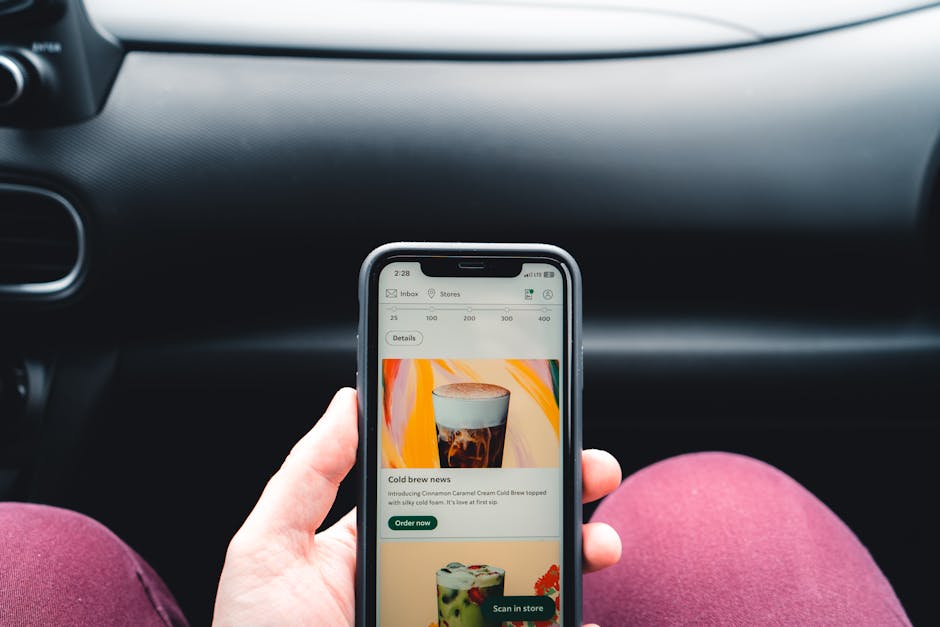
AI as the New Barista: How Starbucks Is Personalizing Coffee for Asia’s Next Billion Customers
The espresso machine has long symbolized innovation in coffee culture—but today, it is algorithms, not steam, that power global coffee giants. In Asia’s fast-evolving consumer landscape, Starbucks’ Deep Brew AI engine represents an ambitious leap, blending tradition with data-driven personalization to capture new growth in India, Vietnam, Indonesia, and the Philippines. As Shanghai’s 7,800+ Starbucks stores reveal the blueprint for explosive digital engagement, the next wave of opportunity is emerging in Asia’s dynamic but fiercely local markets. [source]
The Genesis of Deep Brew: Starbucks’ Digital Reinvention
From Loyalty Cards to Predictive Engines: Starbucks’ journey toward AI began with simple rewards programs but has matured into an intricate lattice of hyper-local insights. By mid-2025, Deep Brew processes millions of real-time data points from weather patterns, order histories, and local trends, guiding not just what customers are recommended—but when, why, and how those choices are presented.
This transformation is anchored in what Starbucks calls the Digital Flywheel: a virtuous cycle where each digital interaction (from customized orders to push notifications of seasonal drinks) feeds new feedback into the system, yielding a 30% ROI and a 25% surge in repeat visits in leading Asian markets. [source]
China: The AI Laboratory for Coffee Innovation
Setting the Standard in Urban Coffee Culture: With over 7,828 outlets, China isn’t just Starbucks’ largest international market—it’s also their proving ground for digital-first customer experience. Here, integrations with WeChat, Alipay, and Amap have transformed the customer journey with predictive ordering, location-aware promotions, and mobile gifting—setting performance benchmarks such as 20-25% repeat visits, 25% of sales via digital channels, and a 15-20% reduction in food waste.
Deep Brew’s ability to adapt to local preferences (think matcha or oolong lattes), optimize for events like Lunar New Year, and forecast surges has redefined operational agility. This digitized intimacy is what allowed Starbucks in China to counteract price-centric disruptors like Luckin Coffee—demonstrating that AI-personalization, not just price, delivers defensible market share. [source]
Unlocking Asia’s New Coffee Frontiers: Market-Specific AI Strategies
India: Data Fusion for Urban Palates
India’s urban millennials propel a coffee market expanding at ~12% CAGR. Here, Deep Brew is more than a recommendation tool—it’s a cultural bridge. By fusing external data from platforms like Jio and Reliance Retail, Starbucks can nudge masala chai latte orders during monsoon seasons or pilot 10-15 new flavor hybrids in flagship stores.
Tactically, this means leveraging predictive analysis for inventory, launching seasonal snacks, and tracking foot traffic spikes in breakfast hours with initiatives such as masala egg wraps. The anticipated results: a 10% growth in app downloads, 15% improved order accuracy, and a targeted 20% boost in customer retention—a digital moat that runs deeper than local chains’ price wars.
Vietnam: Social-Driven Store Dynamics
Vietnam’s dense cities and surging social media adoption create fertile ground for AI-optimized layouts, staffing, and inventory tied to hyper-local events. Deep Brew, integrated with popular apps like Zalo and Momo, pushes rain-themed cold brew promotions, mirroring the 20 million+ annual digital connections Starbucks achieves in China. The tactical use of event-driven messaging is expected to drive both in-store foot traffic and online engagement.
Indonesia: Viral Personalization Across an Archipelago
Indonesia’s fragmentation across islands is offset by unified digital behavior. Starbucks’ AI engine is being primed to personalize offerings—like palm sugar lattes—through integrations with Gojek and OVO. Dynamic, event-driven menu updates can respond to Jakarta’s festival calendar, driving 20-30% uplift in average transaction value through localized, viral experiences.
Philippines: Density and Demand Forecasting
In the urban sprawl of Manila, Deep Brew orchestrates both labor efficiency (15–20% gains) and product viralization. Integrating with GCash, Starbucks can notify users of limited-run mango float frappuccinos during seasonal heatwaves while piloting frictionless flagship cafés—combining premium relevance with operational agility to outpace local rivals.
What Differentiates Starbucks’ Approach? Comparative Perspectives
Local Disruption vs. AI-Driven Premium Model:
While regional chains (e.g., Luckin in China, family-owned brands in the Philippines) surge on affordability and volume, Starbucks is betting on a differentiated value proposition: data-fueled personalization. The numbers tell the story: Emerging-market disruptors may cut prices, but are challenged to match 25% of all sales driven by smart recommendations, or the 20-million-plus annual digital engagements seen in Starbucks’ mature Asian markets.
Starbucks has also demonstrated that scalable AI doesn’t mean “one-size-fits-all.” Local competitors struggle to deliver the same nuance in flavor adaptation, event forecasting, or super-app integration—a clear distinction in defensibility and stickiness.
AI in Practice: From Algorithms to the Coffee Counter
Hyper-Localization as the Engine of Loyalty:
Deep Brew’s real-world application in Asia extends to:
• Menu Personalization: Driving real-time changes in boards, localizing products (“masala chai lattes” in Mumbai, “mango float frappuccinos” in Manila), and launching targeted email/app notifications.
• Voice and Chat Bots: Rolling out ChatGPT integration in select countries enables vibe-based drink discovery (“I want something cozy”), with customers even uploading photos for bespoke recommendations.
• Store Siting: Atlas AI optimizes expansion, identifying high-potential neighborhoods while minimizing cannibalization.
• Inventory & Labor Forecasting: 15-20% improvements in product waste and staff allocation, driving leaner and greener operations.
This confluence of digital, operational, and experiential innovation is what positions Starbucks’ AI playbook as both scalable and defensible.
Patterns Emerging from the Data: Transforming the Asian Coffee Ritual
Digital Rituals and Repeat Visits:
By mid-2025, Starbucks’ Deep Brew is powering more than 30 million digital connections each year outside China—mirroring the engagement rates that have already redefined loyalty in Shanghai and Beijing. Repeat visits have climbed by 25% in key pilot markets, and digital sales now account for as much as a quarter of total revenue in China.
This shift toward predictive, AI-driven customer journeys is not merely technological—it is cultural, redefining the very ritual of urban coffee consumption in Asia. Real-world behavior is shaped, not just tracked: weather, festival calendars, and even neighborhood-level social media trends are all active ingredients in Starbucks’ new recipe for growth.
Actioning the Vision: Phased AI Deployment at Scale
Phase 1: Digital Foundations (Months 1–6): Each market receives a $50M injection to establish Deep Brew, connect with local APIs (e.g., UPI in India, GCash in the Philippines), and pilot in 20 stores. Top KPIs: 10% app user growth, 15% better order accuracy.
Phase 2: Personalization Ignition (Months 7–12): Predictive pushes, loyalty-driven “My Starbucks Barista,” ChatGPT beta for vibe-based recommendations. Results: 20-25% repeat visit rates; 20–30% higher ticket sizes.
Phase 3: Scale and Optimization (Months 13+): Expansion to 100+ stores per market; use Atlas for siting. Target: 15–20% more operational efficiency and 30M digital connections per cluster.
Risks, Mitigations, and Forward-Looking Insights
Data Privacy: Localized adaptation comes with its own set of challenges, most notably in regulatory compliance (e.g., PDPA in the Philippines). Starbucks’ approach is to embed data stewardship in AI deployment, maintaining consumer trust with proactive localization.
Competitive Risks: While local chains excel in speed and affordability, Starbucks’ “AI moat” ensures premium value through stickier, more relevant experiences.
Integration Delays: Phased rollouts with buffer periods mitigate technical and infrastructural risks, making the transformation sustainable rather than superficial.
“Starbucks’ advantage in Asia is not just scale, but a granular, adaptive intelligence—where every cup, order, and notification is locally attuned and globally optimized. The coffeehouse of the future is not just automated, but anticipatory.”
Looking Ahead: The Strategic Imperative for AI-Driven Personalization
The Billion-Dollar Opportunity—And Why It Matters Now:
As international sales accelerate and markets like India and Vietnam mature, the pivot to AI-powered localization is no longer optional—it is existential. Starbucks’ Deep Brew represents the leading edge of a transformation where premium brand value is as much about personal context as it is about product quality.
The forward-thinking benefits are profound: deeper customer retention, defensible differentiation against local price disruptors, operational efficiency, and richer engagement that can weather the volatility of emerging markets.
The New Coffeehouse Platform: Starbucks’ phased blueprint demonstrates how a $50M-per-market investment, rigorous measurement, and local partnerships can foster a digital platform strategy. This approach turns each store into a node in a larger ecosystem—one that continually learns, adapts, and expands the very definition of “the third place” in Asian society.
For cross-functional teams in retail, data science, and strategy, the lesson is clear: AI is not just a feature—it is the enabler of future category leadership. The Starbucks Asia case offers a rare, actionable template for any global brand seeking to blend tradition and transformation at scale.
Conclusion: Why the Next Coffee Revolution Will Be Personalized—And Predicted
Starbucks’ AI journey in Asia is a masterclass in local adaptation, digital transformation, and strategic vision. By embedding Deep Brew across emerging Asian markets with tailored, AI-powered experiences, Starbucks raises the bar not only for coffee, but for the future of all consumer brands in culturally diverse, fast-growth regions.
The strategic importance cannot be overstated: as competition intensifies and consumer expectations for relevance grow, only those brands that can anticipate, adapt, and continually personalize at scale will thrive. In this new era, the most successful coffeehouses won’t just serve customers—they’ll know them, anticipate them, and keep them coming back for more.
For Starbucks, and for the rest of the retail world, the future of coffee is AI—brewed deeply, served locally.