
How To Set Up Personalized Coffee Orders On The Luckin App In Mainland China: Step-by-Step Guide For Business And Households
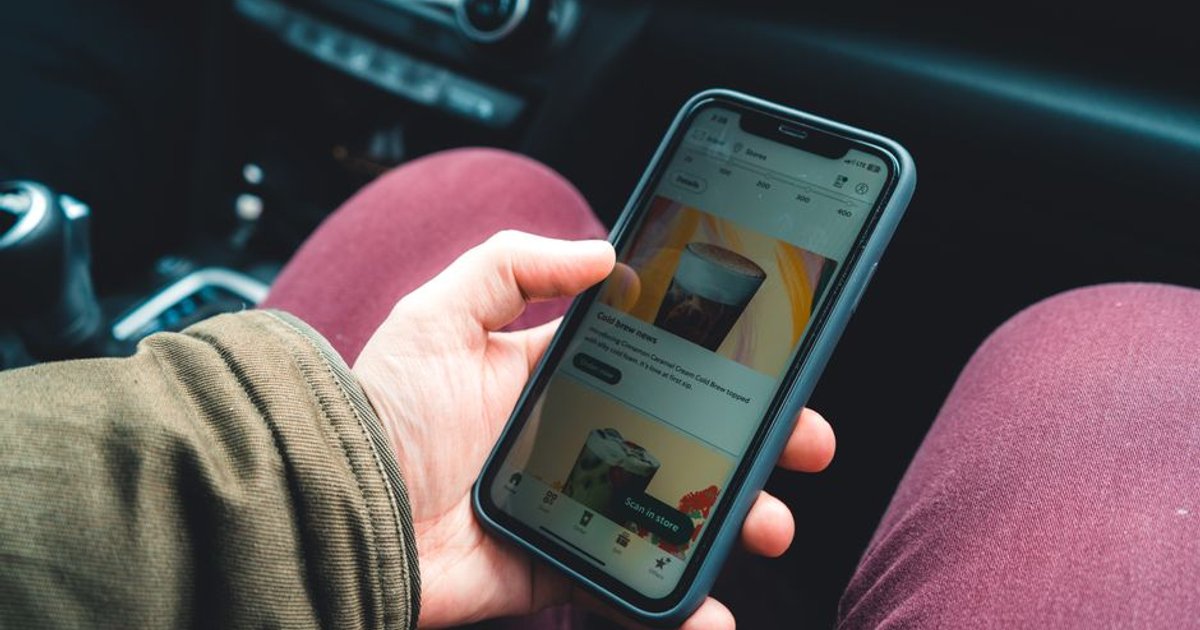
Beyond the Bean: How Luckin Coffee’s Personalization Engine in China Is Redefining Mobile Ordering
In the rapidly evolving world of Chinese retail, few stories have matched the velocity and ambition of Luckin Coffee. Once embroiled in controversy, Luckin has become a pillar of China's digital-first, “new retail” ecosystem by leveraging technology, hyper-localization, and a relentless focus on customer personalization. As the Chinese digital economy matures, Luckin’s official app, 瑞幸咖啡, offers a window into the future of frictionless ordering, advanced customization, and operational precision that is influencing coffee culture and beyond.
The Digital Coffee Counter: Where Customization Meets Scale
Transformation through Technology. Luckin Coffee’s journey from market disruptor to mainstream staple is a case study in technological adaptation. By September 2026, the company’s app had become a ubiquitous fixture on Chinese smartphones, available via the Apple China App Store for iOS 15.1+ and leading Android channels. With an explicit focus on digital convenience and personalization, the app is designed not just for speed, but for meaningful engagement.
Operationalizing Personal Preferences. Historically, coffee chains in China focused on delivering Western-style drinks to an emerging urban middle class. What sets Luckin apart is the granular control offered to consumers: every order is an opportunity to specify temperature, sweetness, milk, ice, and more. This isn’t merely cosmetic; the menu, customization fields, and recommendation engines are architected to respond to the feedback loop of real customer behavior, leading to suggestions that anticipate tastes and seasonal demand.
Setting Up: The Foundations of a Personalized Luckin Experience
Getting the Right App, in the Right Place. The first barrier is one of digital geography. New users must download the China-specific Luckin app, 瑞幸咖啡, verifying both developer identity and compatibility (iOS 15.1+). Android users are urged to use only trusted Chinese app stores, checking that the package is com.lucky.luckyclient to avoid impersonators or data risks. This focus on official channels reflects the company’s commitment to security and the ecosystem's integration with local payment and fulfillment infrastructure.
Account Creation and Region Lock-In. New users are funneled through a process designed around the realities of Chinese mobile commerce, requiring mainland phone numbers, localized terms of service, and region-specific payment options. This makes Luckin’s app operationally distinct from its international versions in Hong Kong, Southeast Asia, or the Middle East, further underlining the need for market-specific digital experiences.
Ordering Unpacked: The Mechanics of Customization
From Selection to Customization. The order flow is engineered to minimize friction. After selecting a city or store, users can browse an evolving array of drinks and snacks, each with detailed customization options. The core innovation lies in how the app surfaces parameters, size, temperature, ice, sweetness, milk, and toppings, through Chinese-language controls such as 规格 (size), 冰量 (ice), 温度 (temperature), and 糖度 (sweetness). Unlike many Western systems where only basic tweaks are possible, Luckin’s approach encourages a high degree of personalization, supported by standardized fields that streamline kitchen workflow.
The Limits and Power of Order Notes. For edge cases, free-text order notes (备注) allow further, if limited, instructions. However, these are secondary to standardized controls; consistency and auditability are prioritized for operational scalability. The app’s architecture thus balances flexibility with the realities of mass-market foodservice, a reflection of Luckin’s operational maturity post-scandal.
Repeatable Personalization: The Rise of the Smart “Reorder”
Building Loyalty through Convenience. Luckin’s system is not just about one-off customization but about creating a habit loop. Its recommendation engine, as described in official material, draws on past orders and explicit preferences to anticipate and propose repeat purchases. The ability to access “reorder” or favorite functions ensures that a preferred drink configuration can be executed with minimal friction, driving up repeat purchase rates and deepening customer attachment to the brand.
Operational Implications. This heavy emphasis on repeatable, pre-set orders means that backend systems must be robust, ensuring that inventory, pricing, and customization fields remain accurate across seasons and app updates. For users, this provides both comfort and continuity; for Luckin, it means data-driven insights into how small changes in product configuration can affect not only satisfaction but also profit margins.
Digital Discounts and the Real Economics of Couponing
The Power, and Pitfalls, of Discount Ecosystems. Luckin’s digital coupon and promotion system is vast, intricately woven into China’s culture of digital deals. Before payment, users can select coupons linked to store, product, order size, or time, sourced not only from Luckin’s own app but also from third-party platforms like Meituan, Dianping, or WeChat mini-programs. Yet, with this abundance comes complexity: coupons may be restricted by new-user status, location, product category, or may not stack with other discounts. As noted in consumer analyses, the lowest advertised price is rarely universal, and the headline discount may obscure the real, payable outlay.
Managing Discount Dependence. The real story is not just about winning price-sensitive customers, but about managing the cost of acquisition, balancing trial and retention, and preventing excessive margin erosion. The Luckin app’s analytics help the company distinguish between gross sales and net profitability, allowing careful calibration of discounting strategies.
The Payment Layer: Localized, Secure, Relentlessly Efficient
Integration with China’s Payment Platforms. A major competitive edge for Luckin is its deep integration with China’s mobile payment infrastructure, primarily Alipay and WeChat Pay, both trusted and ubiquitous in the local market. This focus ensures near-instant transaction confirmation and eliminates friction at the point of sale, but also means that international cards and wallets are rarely accepted in the mainland app version. Payment reliability, along with clear error resolution paths, is central to Luckin’s promise of convenience.
Fulfillment in the Real World: The Store as the Last Mile
Store Selection and Order Routing. Luckin customers choose between self-pickup (自取) and delivery (外卖), with the app surfacing store proximity, availability, and preparation time. Orders are tightly coupled to a chosen location, minimizing errors but also requiring careful user attention. For delivery, address fidelity is paramount, reflecting the needs of urban Chinese consumers who may want coffee delivered to an office, residence, or even a co-working space.
Execution and Quality Control. The final handoff, whether in-store or via courier, is facilitated by in-app pickup codes, real-time status updates, and reminders to check for customization accuracy. Mistakes in temperature, sugar, or toppings can still occur, but the system is designed to minimize ambiguity, ensure accountability, and support rapid issue resolution.
Troubleshooting and User Experience Management
Anticipating and Preventing Issues. Potential pains, from missing stores, failed payments, or vanished customizations, are addressed through dedicated troubleshooting protocols. The app guides users through common remediation steps, whether re-enabling location permissions, updating software, or reviewing coupon restrictions. Importantly, the system is transparent about the limits of personalization, particularly in cases of ingredient shortages or fixed-specification products.
The Comparative Lens: Luckin’s China App vs. International Versions
Regional Fragmentation and the Realities of Platform Lock-In. One of the most profound insights for new or international users is that Luckin’s personalization magic is not easily portable. The mainland China app is a separate ecosystem from its peers in Hong Kong, Macau, Taiwan, Southeast Asia, and the Middle East, each with their own app version, payment landscape, and promotional strategies. For example, a coupon or digital wallet from the Hong Kong app will not transfer to the mainland system, a point emphasized in local consumer guides.
Why This Matters. This fragmentation poses both challenges and opportunities. For local users, the system is optimized for speed, integration, and data security. For global travelers or business decision-makers, it is a reminder of the need to design market-specific solutions, rather than assume that globalized technology will function uniformly across borders.
Business Lessons: Personalization as a Profit Lever
Turning Customization Into Higher-Value Orders. Luckin’s success illustrates that personalization is not simply a feature, but a business model. By enabling users to pay for larger sizes, premium milks, extra shots, or bundled food, the app increases the average order value and deepens customer engagement. Paid add-ons and selective cross-selling drive incremental revenue while offering tangible value to the customer.
Discounting Needs Discipline. However, Luckin’s ongoing challenge is to prevent the “coupon addiction” that can erode sustainable profits. The company, and its competitors, must vigilantly distinguish between gross sales driven by heavy discounts and genuine incremental margin from loyal customers. Segmenting promotions, tracking net contribution, and optimizing recommendation engines on a store-by-store basis are now central to digital-era retail management.
Operational Precision: The Store’s Vital Role in Personalization
The Execution Gap. No matter how advanced the app, the ultimate success of a personalized transaction hinges on in-store execution. Systematized customization fields enable rapid, accurate preparation, and are easier to audit than free-text notes. Luckin tracks a suite of metrics, preparation and pickup wait times, missing items, customization accuracy, refunds, and complaints, to continually refine both digital and physical processes.
The Feedback Loop. This approach has allowed Luckin to create a virtuous cycle, where digital data informs operational improvements and successful fulfillment builds customer trust, fueling more frequent and higher-value orders.
Consumers and Their Digital Rituals: Advice for Households
Practical Guidance for Everyday Users. Luckin’s official guidance encourages consumers to treat the final order screen as their point of truth: confirming the correct app, store, fulfillment mode, and every customization detail before proceeding to payment. Saving frequent orders is recommended, but vigilance remains essential, especially with seasonal menu changes or app updates. For first-timers, self-pickup is positioned as the safest mode, allowing direct verification before leaving the store.
Ease Meets Caution. While Luckin’s ecosystem is designed for effortless reordering, the complexity of options, and the pace of menu rotation, demands attention from users. The result is a highly versatile tool for coffee enthusiasts and busy urbanites alike, but one that rewards careful, context-specific use.
Looking Forward: The Broader Lessons of Luckin’s Model
Personalization at scale is not simply about the volume of choices, but the precision of execution, where each digital touchpoint, from app download to order pickup, is optimized for both operational reliability and customer delight. The future of retail will belong to those who can balance technology, transparency, and local nuance to turn routine transactions into repeatable, profitable experiences.
The Crossroads of Mobile Commerce and Local Intelligence. Luckin’s trajectory exemplifies how digital-native brands in China are outpacing global rivals by infusing personalization into both product and process. As the competition intensifies, the ability to seamlessly support repeat orders, optimize discounts, and guarantee delivery accuracy is rapidly becoming table stakes.
The Data Dividend. The granular data generated by Luckin’s app, spanning product customization, store throughput, payment method, and coupon activation, offers a goldmine for ongoing optimization. By monitoring not just sales, but contribution margin and customer lifetime value, Luckin is setting benchmarks for what a modern, profitable retail platform should look like.
A Template for Other Sectors? While coffee is the current battleground, the architecture and operating model underpinning Luckin’s app have lessons for quick-service restaurants, grocery, pharmacy, and any business where ubiquitous mobile ordering, hyper-local fulfillment, and user personalization are converging.
Conclusion: The Stakes of Smart Personalization in China and Beyond
The story of Luckin Coffee’s personalized ordering app is about more than just caffeinated convenience. It is a microcosm of the strategic revolution reshaping China’s consumer landscape, where digital personalization, local adaptation, and operational discipline come together to redefine what modern retail can achieve. For both business leaders and everyday consumers, the lessons are vivid: in a world of omnipresent choice, the winners will be those who make every step of the customer journey seamless, transparent, and locally resonant.
As Luckin continues to iterate, measure, and expand, its model stands as a blueprint for the next wave of mobile commerce. The time to learn from, adapt, and out-innovate this approach is now, because the stakes, for market share, profitability, and customer loyalty, have never been higher.