
How ZUS Coffees Mobile-First, Wallet-Integrated Strategy Is Disrupting Urban Coffee Culture In Kuala Lumpur, Manila, Bangkok, And Jakarta
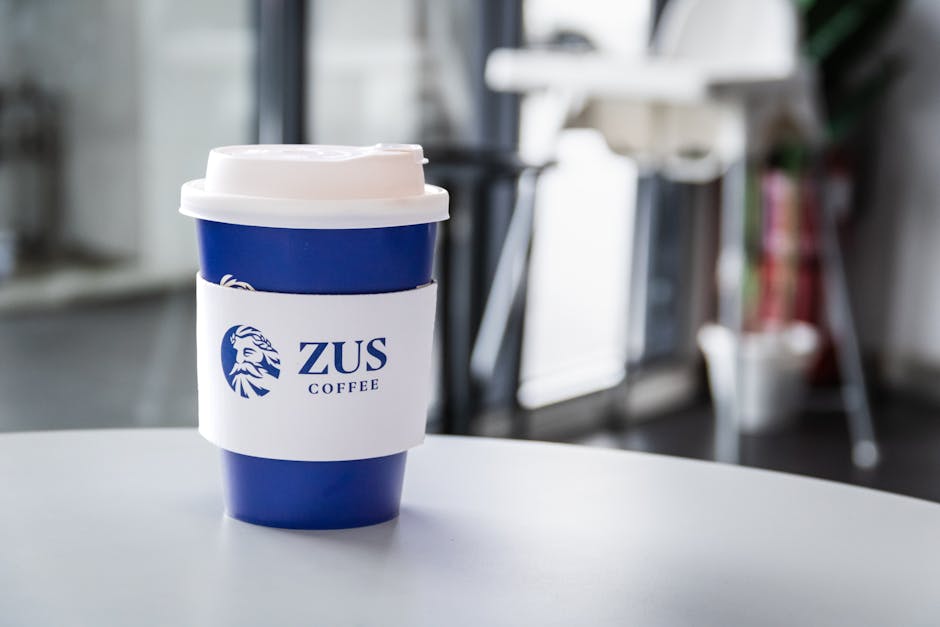
Digital Disruption in Southeast Asia’s Coffee Market: ZUS Coffee’s Wallet-Integrated Revolution
In the space of a few short years, Southeast Asia’s coffee landscape has undergone a seismic shift—one driven not by changing tastes, but by the digital wallets in consumers’ pockets. Chains like ZUS Coffee have become synonymous with a new era of mobile-first retail, where QR codes, app-based loyalty, and hyper-local menus redefine daily transactions. Against the backdrop of a region where digital payments now account for over 70% of e-commerce transactions, ZUS Coffee’s rise is less a story of coffee than of how technology is transforming the fundamentals of customer experience, growth, and competition. This is the exposé of a chain that has transcended café culture, showing that in Southeast Asia, the conversion layer for daily purchases is not a credit card, but the local e-wallet.
The Digital Payment Revolution: Context and Catalysts
Historic Context: Southeast Asia’s urbanization and the proliferation of smartphones have primed the region for rapid digital disruption. For years, multinational coffee chains operated through card-first, global payment rails. However, as Southeast Asian cities leapfrogged traditional banking with e-wallets and QR payments, the business model for coffee retail began to unravel. In Malaysia, Vietnam, Indonesia, Thailand, the Philippines, and Singapore, market leaders are now those who have integrated country-specific payment stacks into their daily operations.
Digital Wallets as Volume Engines: According to recent market studies, e-wallets are now the “volume engine for everyday spending,” with a market-by-market hierarchy: bank-transfer-first in Malaysia and Vietnam, QR-first in Thailand and Indonesia, wallet-first in the Philippines (Help2Pay). The shift has transformed the coffee category, which is high-frequency and low-ticket, making frictionless checkout not just an optimization, but a baseline requirement.
ZUS Coffee’s Playbook: Mobile-First, Wallet-Integrated, and Hyperlocal
Mobile-First Strategy: ZUS Coffee’s rise is tracked closely by analysts at Growth HQ, who highlight its explicit focus on mobile-first customer journeys. Its stores are designed around QR redemptions, e-wallet payments (including GrabPay, GoPay, OVO, DANA, ShopeePay, and GCash), and app-based loyalty modules, positioning ZUS as digitally native rather than a traditional café operator.
Wallets as Core Conversion Layer: For ZUS, partnering with local e-wallets isn’t merely a tactical option—it’s a foundational conversion layer. The chain’s omnichannel model leverages QR codes for offers and instant in-app redemptions, integrating payment with loyalty to drive repeat purchases. As Growth HQ notes, “Coffee is a high-frequency, low-ticket category; payments must be near-invisible at checkout to drive repeat behavior.”
Breaking Down Country-Level Strategies: Nuance Over One-Size-Fits-All
Malaysia: With digital payment adoption above 80%, Malaysia is ideal for broad wallet partnerships. Local rails are deeply embedded, and e-wallets like GrabPay and Touch ‘n Go are normalized for daily purchases (Digital in Asia).
Philippines: Here, the wallet-first approach dominates. GCash boasts 94 million users and 19 million daily transactions, making it essential for any retailer. ZUS’s wallet stack must include both GCash and Maya, with payments bundled tightly to in-app loyalty.
Indonesia: Wallets have around 42% share in e-commerce payments. The strategy is to prioritize local leaders (GoPay, OVO, DANA, ShopeePay) and structure offers for QR-first customer journeys.
Thailand: The QR payment system PromptPay is the backbone of everyday transactions, even as wallet penetration is lower. ZUS must combine wallet support with PromptPay/QR to reach mass adoption.
Vietnam: MoMo, with over 40 million users and fast YoY growth, defines the wallet landscape. ZUS’s wallet integration here should center on MoMo, layering in loyalty mechanics that encourage repeat visits.
Singapore: While digital wallets are meaningful, cards remain dominant. ZUS needs a hybrid payment stack, optimizing for both cardholders and wallet users.
Innovative Practices: Beyond Payments
Bundling Loyalty with Payment: ZUS’s digital loyalty app is not just a tool for rewards—it’s a driver of conversion and frequency. By embedding instant in-app redemptions and gamified repeat-use incentives, ZUS translates payment friction into loyalty momentum (Growth HQ).
Hyperlocal Menus and Experiential Marketing: ZUS differentiates itself by creating hyper-local menu variants, tailoring flavor profiles, and launching market-specific campaigns. Digital onboarding and influencer-driven growth amplify these tactics, as seen in Kuala Lumpur, Manila, Singapore, and Bangkok (Growth HQ).
Performance Measurement: Growth HQ frames ZUS’s performance around AOV (Average Order Value), app downloads, and repeat rates—metrics that must be tracked holistically, not just at the point of sale but through user retention in the digital ecosystem (Growth HQ).
Comparative Analysis: Global Versus Local Rails
Legacy Card-First Models: Multinational chains operating in Southeast Asia often maintain a card-first orientation, relying on Visa/Mastercard rails and global partnerships. While this approach simplifies cross-border operations, it increasingly runs counter to local consumer behavior—and can alienate high-frequency urban users.
Local Wallet Integration: In contrast, chains like ZUS Coffee adopt a localized payment stack, partnering with local e-wallets, QR providers, and banks. This approach requires greater complexity in onboarding and compliance, but unlocks higher conversion rates, stronger loyalty, and deeper market penetration. Recent analysis shows that over 70% of e-commerce in Southeast Asia now transacts via digital payments, and wallet adoption continues to accelerate, especially among Gen Z and millennial cohorts (PayMongo).
New Viewer Perspectives: For new entrants or international chains, the challenge is clear: adopting the region’s payment paradigm is not optional. Failure to partner locally means missed conversion and loyalty opportunities. The strategic implication is profound—digital payment is not just a checkout choice, but a channel for customer engagement, frequency, and retention.
Strategic Recommendations: Designing for the Next Wave
Partner Locally, Not Regionally Only: The data supports country-specific wallet stacks over regional partnerships. Payment integration must address local norms, market leaders, and evolving regulatory environments (Help2Pay).
Bundle Payment with Loyalty: Frictionless payment is only the beginning; integrating wallet payments with in-app loyalty, instant rewards, and gamified incentives multiplies conversion and repeat rates (Growth HQ).
Optimize for Frequency and Ease: Coffee chains must engineer near-invisible checkout experiences, aligning with the high-frequency nature of the category. QR codes, app payments, and rapid redemption are the new standard.
Design by Country: Payment patterns differ materially across Malaysia, the Philippines, Indonesia, Thailand, Vietnam, and Singapore. Payment stack design, loyalty, and menu variants must be localized—headquarters-led decisions will lag behind market reality.
Measure the Right Metrics: For sustainable growth, chains must track conversion, repeat rate, AOV, and app retention. This approach is data-driven and holistic, bridging the gap between digital and physical stores.
“There is no one-size-fits-all in Southeast Asia’s payment landscape; brands that localize their wallet strategy and bundle it with frictionless loyalty will win not just transactions, but the hearts—and frequency—of the next generation of coffee shoppers.”
Looking Forward: The Future of Coffee Retail in Southeast Asia
The Next Stage of Digital Dominance: As digital wallets continue to shape everyday spending, the competitive edge in Southeast Asia’s coffee market will depend on mastery of hyper-local integration, seamless payment experiences, and data-driven loyalty. ZUS Coffee’s wallet-integrated playbook is less a template than a preview—where future chains must adapt quickly or risk irrelevance. The region’s payment ecosystem is evolving fast, and only those who design for country-specific realities will capture the market’s full potential.
Strategic Importance: The implications go beyond coffee: the wallet-first, loyalty-bundled model is becoming the archetype for all high-frequency retail. For decision makers, the call to action is clear—build localized, frictionless payment stacks that drive repeat behavior, measure what matters, and view digital payment integration as a foundation, not a feature.
Conclusion: Southeast Asia is charting a path where coffee chains thrive not on brand alone, but on their ability to localize, digitalize, and mobilize. In this new landscape, winning means mastering the conversion layer—and for ZUS Coffee, that layer is the digital wallet.