
International Schools in Thailand: Market Opportunities Beyond Bangkok

International Schools in Thailand: Market Opportunities Beyond Bangkok
Thailand’s international school sector outside Bangkok now generates robust business, property and service opportunities in Chiang Mai, Phuket, Pattaya/Eastern Seaboard and Hua Hin. Tuition and associated fee revenue in these markets can approach THB 1 million per student per year, with revenue models, licensing hurdles and downstream effects shaping local investment potential. Decision-makers looking to enter or partner in the Thai education sector should map not only headline tuition numbers but also the web of real estate, transport, and digital transformation opportunities these schools create, and track the changing rules and accreditation landscape that underpin credibility and demand.
Market Mapping: School Distribution and Demand

Outside Bangkok, four markets consistently lead Thailand’s international school landscape by demand and breadth of offering: Chiang Mai, Phuket, Pattaya/Eastern Seaboard, and Hua Hin. Each combines a unique mix of expatriate, returning Thai, and elite local families driving long-run admissions growth.
- Chiang Mai: Home to highly regarded schools such as Prem Tinsulanonda International School (IB, day and boarding), Chiang Mai International School (US/AP), and Lanna International School (British/international), the region draws from broad expatriate, retirement, and Thai education markets. Its northern location and comparatively lower top-end fees than Bangkok maintain steady demand, often with waiting lists for premiere schools.
Chiang Mai market coverage - Phuket: International school demand is concentrated around northwestern and central areas, with schools like British International School Phuket (BISP), UWC Thailand (IB), and International School Phuket at the upper end of fee structures. International family demand is strong, but total household costs are inflated by premium accommodation and transport expenses.
Phuket school breakdown - Pattaya / Eastern Seaboard: Supported by industrial zones, strong expatriate employment, and proximity to Bangkok, top schools such as Regent’s Pattaya and Rugby School Thailand (British/IB) often offer boarding, which broadens the local and regional catchment. The area’s connectivity and varied school types support ongoing demand from both families and business relocations.
Pattaya market dynamics - Hua Hin: Serving a niche, lifestyle-led market, Hua Hin International School follows a British-oriented international curriculum with fewer direct competitors. This limited supply creates high stakes for family due diligence and inflates per-place competition.
Hua Hin comparison data
Tuition, Fees and Revenue Models
Revenue at Thai international schools is multi-layered. For 2026 to 27, annual tuition in Chiang Mai, Phuket, Pattaya/Eastern Seaboard, and Hua Hin generally spans THB 200,000 to nearly THB 1 million, exclusive of meals, transport, uniforms and capital charges (tuition and fees report). The exact figures depend on school, programme, and year group, with published rates differing sharply between pre-primary, primary, and senior grades. For instance, Chiang Mai’s leading schools publish tuition from THB 290,000 to THB 814,000 (Chiang Mai fees), while schools like BISP in Phuket report upper-end tuition reaching THB 982,700 (Phuket tuition detail).
Non-tuition fees are material: Application fees are typically THB 4,000 to 8,000, with enrolment/placement and refundable bond fees often in the THB 100,000 to 300,000 range per student, depending on the school and the year group (fee composition examples). Boarding, where available, can add THB 350,000 to 478,000 annually at schools like Prem and more at others (boarding fee examples). Many mandatory “capital” or “development” charges, trip fees, and language/learning support costs are quoted separately. Published tuition may not include all compulsory charges, and some schools update fee schedules without public notice, necessitating direct confirmation for each applicant.
| Market | Published Tuition (THB) | Notable Schools |
|---|---|---|
| Chiang Mai | 290,000 to 814,000 | Prem, CMIS, Lanna |
| Phuket | 200,000 to 982,700 | BISP, UWC Thailand |
| Pattaya / East | 226,000 to 999,000 | Regent’s, Rugby School Thailand |
| Hua Hin | 350,000 to 712,000 | Hua Hin International |
Revenue hot spots: These fee structures create substantial cashflow potential, especially when combined with strong application demand, sibling enrolments, and long average stays, but the real revenue picture depends on net effect after scholarships, discounts, and annual fee hikes (market overview).
Regulation, Licensing and Accreditation Barriers
International schools in Thailand must operate under Ministry of Education licensing, but curriculum accreditation (e.g., IB World School status, Cambridge/UK exam registration, US accreditation) is a separate and essential verification step for both families and investors. Schools must also demonstrate secondary pathway continuity and recognized exit qualifications, for example, IB Diploma or A Level, since changing accreditation or program status can sharply affect market reputation and admissions viability by 2026 or beyond (curriculum and licensing guidance).
Crucially, licensing, program accreditation, and examination arrangements can change without broad public notice. Schools sometimes update their status or lose credentials, which means all investors, partners, and prospective applications must verify details directly with each provider and request current documentation before financial or operational commitments (uncertainty on accreditation).
Property and Service Spin-offs: Transport, Housing, Activities
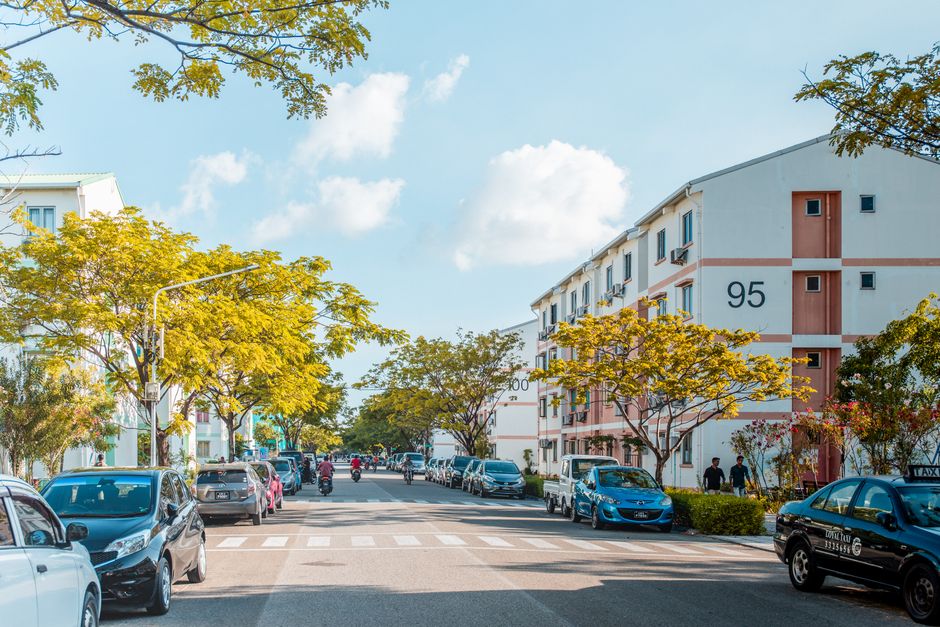
Strong international school presence directly benefits nearby property markets, especially in Chiang Mai, Phuket, and Pattaya/Eastern Seaboard. Expatriate families and relocating executives drive up rental demand, boosting yields and sale values within school catchments, particularly where road access and realistic commute times are competitive advantages (property-school nexus).
However, the effect is highly localized. In Chiang Mai and Phuket, daily traffic congestion and limited road networks mean that ‘proximity’ is best measured by real travel time, not distance. This shapes both property development strategy and the value proposition for school bus/transport providers. In Hua Hin and smaller markets, lower school density means less property competition but also thinner resale liquidity and fewer ancillary service spin-off opportunities.
- School transport and security: Digital platforms for bus routing, student check-in/check-out, and real-time travel updates are increasingly in demand as schools compete for international families’ trust and convenience.
- Enrichment and advisory services: English-language support, learning support, and after-school activities represent ongoing B2B opportunities for local and international providers, particularly those leveraging automation, progress tracking, or hybrid delivery models.
- Boarding and housing: Boarding schools like Prem and Rugby School Thailand create compound demand for both on-campus hospitality solutions and nearby serviced apartments, with international school agents and digital lease platforms benefiting from these links.
Risks and Due Diligence: Fee Structures and Reputation
Business engagement in Thailand’s international school sector demands acute attention to fast-changing admissions, fee, and regulatory environments. Key risks and due diligence requirements include:
- Published fees rarely match total cost: With mandatory capital, enrolment, deposit, and supplementary fees often exceeding THB 200,000 to 300,000 per student, headline tuition rarely reflects the “all-in” family or company outlay (full fee context).
- Admissions timing is critical: Applications are most successful 6 to 12 months before entry; timelines, document requirements, and interview policies vary widely by school and year group (admissions procedures overview).
- Dynamic fee schedules and admissions policies: Schools may adjust fee schedules annually or mid-year, and sibling/early payment discounts, if any, are not always published. Direct confirmation with each school is essential.
- Licensing or program disruptions: Loss of a school’s accreditation or exam center status can quickly undermine value for both families and investors.
- Market opacity in smaller cities: In markets like Khon Kaen or Udon Thani, published fees and school data may be limited or outdated. Investment or service provision in these areas requires even more direct due diligence and in-person verification (market opacity risks).
For actionable, household-level guidance on admissions, cost planning and family setup, we recommend our expat family guide on setting up for international schools in regional Thailand. See household guide to family setup and schools.
Growth Hotspots: Chiang Mai, Phuket, Pattaya, Hua Hin

Among Thailand’s regional cities, Chiang Mai, Phuket, and Pattaya/Eastern Seaboard stand out for breadth of school choice, fee revenue potential, and positive feedback loops into housing, security, and digital service sectors. These “cluster” markets support scalable business models for traditional education providers, advisory and automation-driven startups, and property investors alike.
- Chiang Mai offers lower headline tuition than Bangkok but high volume and cluster effects, supporting service and property bundling models (Chiang Mai school context).
- Phuket commands top-end annual fees and has a diverse international enrolment, but accommodation and transport costs must be factored into lifetime value and ROI calculations (Phuket tuition detail).
- Pattaya/Eastern Seaboard attracts both resident and boarding pupils, with industrial and MNC presence generating steady corporate placements and demand for digital admissions, reporting, and security tech (Pattaya fees).
- Hua Hin delivers niche, high-yield opportunity for digital-first or advisory disruptors, but limited enrolment capacity raises entry barriers and requires agile product-market fit assessments (Hua Hin school details).
Action Points for B2B Leaders and Investors
- Map international school catchments against property development or service roll-out plans to identify scalable investment points.
- Develop or partner for digital admissions, transport, or parent communications platforms tailored to schools navigating multi-curriculum, fast-changing fee environments.
- Build direct verification protocols for licensing, accreditation, and contractual fee terms, not relying solely on published averages or media summaries.
- Target ecosystem service offerings (transport automation, advisory, language support) in top-tier cities, while treating emerging markets with additional caution and due diligence.
For more market comparison tools and digital strategy insights for education and property sectors in Southeast Asia, visit Growth HQ’s resources or explore vertical-specific content at our sister portals.
Is your business mentioned here, or should it be? We feature products and services our readers can use.
Get featuredRelocating to Singapore
Moving staff or family to Singapore?
A relocation works when the household works. GoodHelp, our household help partner in Singapore, helps foreign hires and their families find the right domestic helper, with 20 years of agency experience.
Find the right helper ↗Is your business mentioned here, or should it be?
We feature products and services our readers can use.