
Southeast Asias Coffee Tech Boom: Top Startups, Market Leaders, And AI Disruption In Vietnam, Indonesia, Malaysia, Thailand, Singapore, And The Philippines (2025 Outlook)
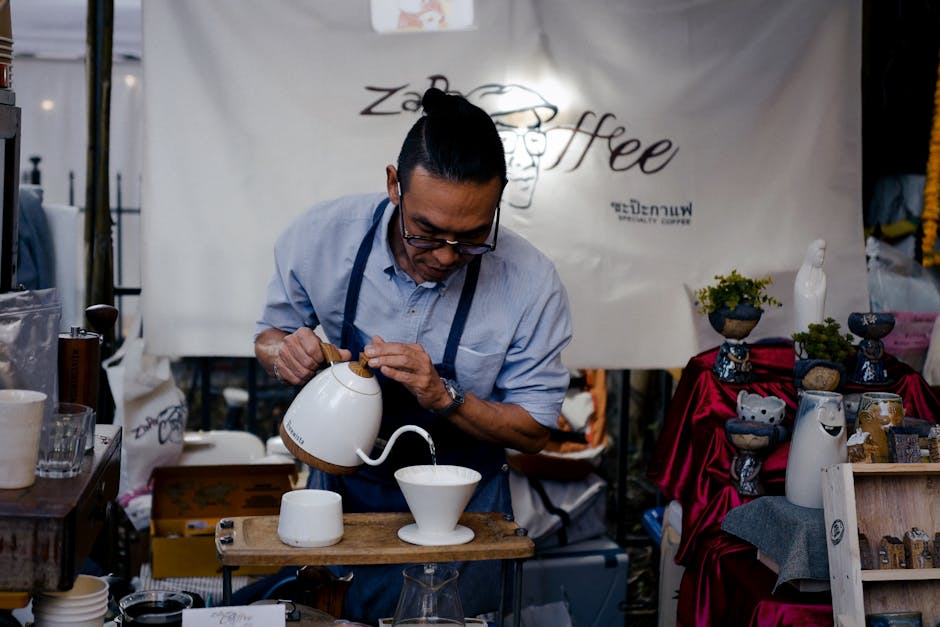
Southeast Asia’s Coffee Tech Revolution: How AI, Digital Franchises, and Sustainable Startups Are Reshaping a $9.9B Market
In the bustling cities and rural expanses of Southeast Asia, a new wave of coffee culture is brewing—one that fuses deep-rooted traditions with cutting-edge technology. Once dominated by street-side vendors and global franchises, the region’s coffee scene is now being redefined by a surge of nimble startups leveraging artificial intelligence, app-driven platforms, and sustainability breakthroughs. As the market eyes a leap from $9.9 billion by 2025 to a projected $265 billion by 2032, countries like Vietnam and Indonesia are emerging not just as top consumers, but as global innovation hubs for coffee tech. This exposé delves deep into the market’s transformation, the strategies fueling its meteoric rise, and the startups poised to shape its next chapter.
The Digital Awakening: A Coffee Culture Transformed
From Tradition to Disruption: Coffee has long been integral to Southeast Asian life, with distinctive local flavors and communal rituals like Vietnam’s “phin” brewing or Indonesia’s sweet blends. But today’s consumers demand more—seamless digital experiences, affordable luxury, and conscious sourcing. This industry pivot is fueled by high smartphone penetration, surging demand for convenience, and an influx of venture funding.
AI and Automation as Catalysts: Automation is no longer a distant vision. Café Amazon in Thailand, with over 4,400 outlets, has rolled out AI-driven loyalty apps enabling 80% of new stores to launch as digital-first. Inventory, site selection, and personalized orders are increasingly powered by machine learning, compressing operational costs and driving rapid franchise expansion into untapped tier-2 and tier-3 cities.
Franchising’s Tech Makeover: Inspired by China’s Luckin Coffee—which scaled to 12,000+ AI-integrated stores—Southeast Asian players like Malaysia’s ZUS Coffee are deploying proprietary app ecosystems and sub-$2 pricing to storm the market. Their success sets a benchmark for velocity and efficiency, with ZUS reporting 30% year-on-year growth and overtaking Starbucks in both outlets and revenue momentum.
Mapping the Market: Country-by-Country Surge and Strategic Benchmarks
Vietnam: The Digital Frontier
With a market size of $725 million and a dazzling 27% annual growth rate, Vietnam is the centerpiece of Southeast Asia’s coffee tech revolution. Local innovators like Kamereo are using AI procurement platforms to cut supply costs by up to 75%, making it possible for digital-first chains such as The Coffee House and Milano Coffee to penetrate rural markets—a feat global giants have struggled to replicate.
Indonesia: Franchising at Scale
Indonesia’s “mall kiosk wars” are escalating as disruptors like Kopi Kenangan, backed by international investors, pursue an ambitious expansion toward 4,000 stores by 2030. With a focus on order-ahead apps, affordable blends, and hyper-local flavors, Indonesia is proving fertile ground for scalable O2O (online-to-offline) models.
Malaysia and Thailand: Digital Loyalty and Queue Management
Malaysia’s ZUS Coffee has carved out a niche through a focus on halal-certified products, localized app interfaces, and affordable pricing, yielding 30% YoY growth. Meanwhile, Thailand’s Café Amazon uses AI-powered platforms like QueQ and Hungry Hub to streamline reservations and queue management, facilitating hyper-scale digital expansion.
Singapore and the Philippines: Incubation and Analytics
Singapore serves as the region’s innovation hub, with startups like Prefer and Umami Bioworks pioneering beanless, fermentation-driven coffee alternatives, offering sustainability and climate resilience. The Philippines, with its strong sub-$2 demand, is seeing analytics-driven players like Mosaic Solutions optimizing operations for accessibility and waste reduction.
Startup Spotlight: The New Architects of Coffee Commerce
The new vanguard of coffee tech startups is rewriting the rules. Here are the region’s standout players, each selected for their disruptive potential, rapid growth, and unique tech DNA:
- ZUS Coffee (Malaysia): With a proprietary app ecosystem, AI-powered loyalty programs, and sub-$2 pricing, ZUS is leapfrogging international giants in speed and cultural fit.
- Kopi Kenangan (Indonesia): This unicorn boasts a multimillion-dollar APAC expansion, with an eye on 4,000 stores by the end of the decade.
- Flash Coffee (Indonesia/Thailand): Emphasizing tech-driven consistency and filling the gap left by independent shops, Flash Coffee is rolling out accessible, digital-first outlets across the region.
- Prefer (Singapore): Winner at ASEAN-Korea Startup Innovation Week, Prefer’s beanless fermentation offers a hedge against supply volatility and climate threats, with a projected 27% revenue uplift.
- Kamereo (Vietnam): This AI procurement platform is central to the Vietnamese boom, enabling 50-75% cost reductions for café operators and suppliers alike.
These firms represent a dynamic intersection of local insight and global ambition, pushing forward innovations that are rapidly adopted—and often emulated—across borders.
From Franchises to Fermentation: Dissecting the Strategic Shifts
The AI Supply Chain Advantage: The coffee supply chain is ripe for disruption. As raw coffee bean prices fluctuate—a risk exacerbated by climate volatility—platforms like Kamereo and ZUS Coffee are using AI and real-time data to achieve 50-75% operational efficiencies. This not only slashes costs, but also allows for faster, data-driven inventory and sourcing decisions, essential for scaling into underpenetrated areas.
Sustainability and Alt-Tech: With environmental challenges looming, players such as Prefer and Umami Bioworks are leading a quiet revolution in sustainability, producing beanless alternatives through precision fermentation. These innovations directly target climate risks and bean shortages, giving early adopters a valuable ESG (environmental, social, and governance) advantage—and offering a projected 27% uplift in revenue versus traditional models.
Localization Outpaces Global Chains: By embedding native flavors, brewing rituals, and cultural nuances into digital products, regional chains are outperforming global brands like Starbucks and Luckin Coffee in both growth velocity and consumer loyalty—especially in rural and tier-2/3 markets where legacy chains often fail to gain traction.
Comparative Perspectives: What Sets Southeast Asia Apart?
Short-Term Realism vs. Long-Term Ambition: Analysts offer divergent outlooks: the sector is pegged at $9.9B by 2025 in conservative, tech-centric scenarios, yet projected to soar to $265B by 2032 when factoring in deeper market penetration and cross-border expansion. The disparity stems from the region’s breakneck adoption of digital and franchising models—trends that may be unfamiliar to observers accustomed to slower, more mature Western markets.
Startup-Driven Market Dynamics: Unlike North America or Europe, where legacy chains and cautious innovation prevail, Southeast Asia’s coffee landscape is defined by agile upstarts, faster consumer adoption cycles, and a willingness to experiment with new models—from AI-driven menu personalization to fermentation-based coffee substitutes.
“Local First” as a Competitive Weapon: While global chains try to standardize, Southeast Asian disruptors win by hybridizing tradition with technology. This enables them to compress costs (sub-$2 offers), tailor community-based digital experiences, and quickly adapt to regulatory and cultural nuances.
Real-World Implications: Investment, Partnerships, and the Race for Scale
Investment Hotspots: The most compelling returns are currently found in Vietnam and Indonesia, where startups like Kamereo and Kopi Kenangan combine explosive market growth with proven digital playbooks. Investors are advised to prioritize tech supply chains promising 50-75% efficiency gains, while reserving a portion of their portfolio for sustainability bets (Prefer, Umami) as climate risks intensify.
Game-Changing Partnerships: For business decision makers, the optimal route is often partnership or acquisition—mirroring global best practices but adapting them with local expertise. For instance, ZUS Coffee’s supply chain efficiencies offer 50% margin potential to partners entering Malaysia or extending into Thailand, while Flash Coffee’s digital franchise model is ripe for cross-border replication.
Risks and Regulatory Hurdles: While the upside is substantial, the road is not without obstacles. Bean price volatility poses a risk to traditional operators, underlining the importance of alt-tech hedges. Regulatory challenges and inconsistent franchising environments can also complicate rapid scale, making local knowledge and agility paramount.
Metrics That Matter: How to Benchmark Success
Year-on-Year Outlet Growth: Fast-scaling franchises are targeting 25-30% annual increases—a far cry from the single-digit expansions typical of global giants.
Digital Engagement: Daily active user (DAU) rates on proprietary apps, app-based loyalty program participation, and order-ahead frequency are now essential KPIs.
Operational Savings: Platforms achieving 50%+ cost reductions have reshaped the competitive landscape, especially for new market entrants.
“AI-driven localization, sustainability, and digital franchises will define Southeast Asia’s coffee leaders—not only for the next decade, but as a blueprint for global F&B innovation.”
Forward-Thinking Insights: What Comes Next?
The Sustainability Imperative: As climate impacts and supply chain volatility intensify, early adoption of fermentation and beanless coffee will move from novel to necessary. Expect key players to allocate at least 20% of their investment portfolios to ESG-compliant innovations—providing both a competitive moat and a growth hedge.
Cross-Border Blending: The lines between countries are blurring as franchises like ZUS and Kopi Kenangan expand into neighboring markets, adapting hyper-local offerings and mobile ecosystems. This first-mover advantage, particularly in underserved cities, will underpin the region’s ability to leapfrog slower-moving competitors.
The Platformization of Coffee: The race is on to become the “superapp” of coffee commerce, where ordering, loyalty, supply chain, and even sustainability narratives converge in a single digital interface, boosting both engagement and ARPU (average revenue per user).
Conclusion: The Strategic Imperative—Why Coffee Tech Is Southeast Asia’s Next $100B Play
Southeast Asia’s coffee sector is no longer simply a consumer trend—it is an engine of economic transformation, technological upskilling, and regional self-definition. The confluence of AI, digital platforms, franchising speed, and sustainability makes this market a laboratory for the future of F&B innovation. For investors, entrepreneurs, and established players alike, ignoring these signals risks missing out on 50%+ ROI windows in the next two to three years. Those who act decisively—harnessing local intelligence, scalable technology, and authentic brand narratives—will not only ride the current boom but write the playbook for coffee’s global future.
For comprehensive strategy and benchmarking, focus your portfolio on Vietnam and Indonesia for immediate scale, Malaysia and Thailand for operational excellence, and Singapore for frontier innovation. The time to move is now—before global chains retool, and before the next leap in consumer expectations resets the board yet again.
As the world’s next coffee capital emerges, Southeast Asia is not just catching up—it’s setting the pace. The only question left: Will you lead, follow, or be left behind?