
Sustainable Coffee Startups In Vietnam, Thailand, And Indonesia: How Southeast Asias $9.9B Market Is Shaping Global Coffee Trends For 2026
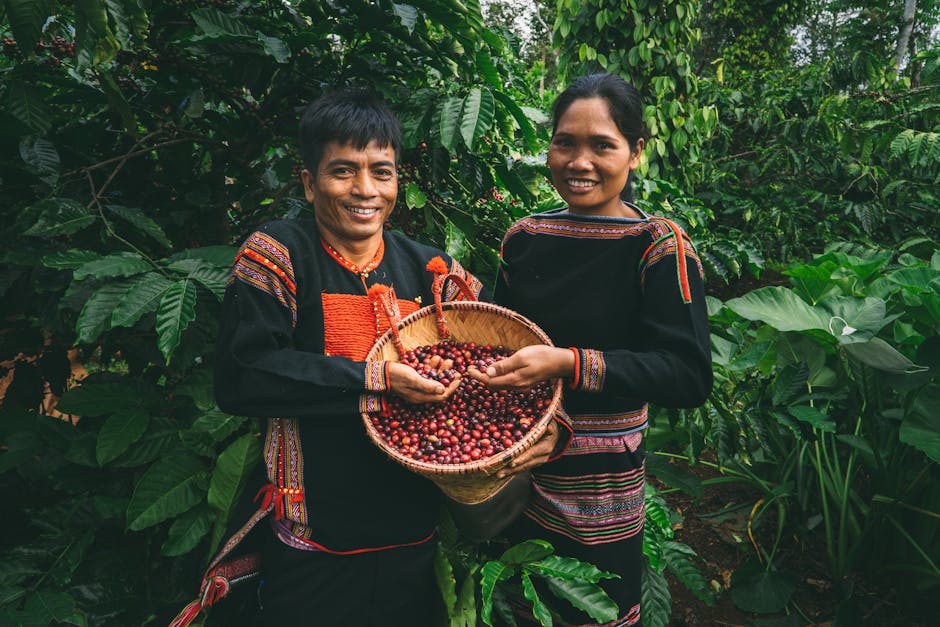
Southeast Asia's Sustainable Coffee Startups: Redefining the Global Brew in 2026
Coffee in Southeast Asia has always been more than a beverage—it is a ritual, an economy, and, increasingly, a platform for both innovation and sustainability. As we approach the mid-2020s, the region’s coffee market, projected to hit $9.9 billion by the end of 2025, is no longer defined solely by its vast plantations or colonial legacies. Instead, a cadre of agile, tech-savvy startups is reshaping not only Southeast Asian consumption and production, but also global coffee’s sustainable future. Their disruptive business models, spanning AI-driven supply chains to groundbreaking “beanless” coffee, are setting a new gold standard for climate resilience, ethical sourcing, and scalable growth. This exposé dives deep into the trends, players, and implications behind Southeast Asia’s coffee revolution—and why the world is now taking its cues from markets once considered peripheral.
The Evolution of a Powerhouse Market
From Commodity to Culture Hub. In the not-so-distant past, Southeast Asia’s coffee sector was predominantly associated with bulk exports of robusta and arabica beans. Vietnam, for instance, rose to become the region’s anchor, now ranking as Asia Pacific’s second largest coffee producer. However, the past decade has seen an explosive transformation, turning the coffee industry into a nexus of technology, lifestyle, and sustainability.
Data-Driven Growth. According to recent analyses, the Southeast Asian coffee market surpassed $9.9 billion by 2025, with Vietnam leading the charge at an astonishing 27%+ compound annual growth rate (GrowthHQ). This growth is not isolated: from Thailand’s thriving café culture to Indonesia’s specialty bean alliances, the entire region has shifted from commodities to consumer-driven, tech-enabled experiences.
Emerging Patterns: Technology, Tradition, and Transformation
AI is the New Barista. Southeast Asia’s coffee startups are not just automating processes—they’re reengineering the entire value chain. In Vietnam, Kamereo deploys an AI supply platform connecting cafés, roasters, and suppliers, yielding procurement cost reductions of 50–75%. In Malaysia, digital-first chains like ZUS Coffee have rapidly outpaced multinational giants, deploying proprietary AI-powered loyalty apps and offering sub-$2 cups—a blueprint now fueling regional expansion.
Fermentation as Disruption. Perhaps the most headline-grabbing innovation is “beanless coffee.” Singapore’s Prefer has pioneered a new wave of lab-cultivated, yeast- and fungi-derived brews that sidestep the environmental and supply risks inherent in coffee farming. Recent pilots in Jakarta scaled output by 20% in days, with projections of a 27% revenue uplift—a climate-resilient, cost-slashing model that’s already drawing interest from biotech and agri-giants worldwide. More than a novelty, beanless tech is seen as a vital hedge against escalating threats to the planet’s 124 coffee species, 60% of which are now at risk due to climate volatility. (GreyB Report)
Tactical Shifts: Local Roots, Global Ambition
Blending Heritage with High-Tech. Where global chains once exported Western concepts, Southeast Asia is now flipping the script. Vietnamese brands like Milano Coffee expertly fuse phin (traditional filter) brewing with digital ordering platforms. In Thailand, Café Amazon has scaled to over 4,500 outlets, with 80% of new store launches AI-optimized—a feat enabled by ecosystem partners such as Hungry Hub and QueQ that digitize reservations and loyalty.
Supply Chain Reinvention. The region’s startups are not just chasing lower costs; they’re unlocking efficiency and resilience. Solutions from Vietnam’s Oddle enable delivery growth in underpenetrated rural markets (20–27%), while Philippine innovations like Mosaic Solutions target food and beverage waste with precise analytics—boosting margins and sustainability in lockstep.
Comparative Perspectives: Old Guard vs. New Champions
Global Brands on the Defensive. The multinationals—think Starbucks, Nestlé, and JDE Peet’s—have long dominated the global narrative with standardization and scale. Yet in Southeast Asia, homegrown players are rapidly outpacing these giants in both footprint and velocity. Consider Malaysia’s ZUS Coffee; its strategy of affordable pricing, digital loyalty, and local branding has propelled it to more outlets than Starbucks within its home market, with Q1 2026 revenues up 35% year-on-year and 2 million Malaysian users on its app.
Exporting the Playbook. Notably, these indigenous models aren’t confined to regional borders. China, for example, witnessed a 58% surge in cafés, surpassing 50,000 outlets in 2023, many borrowing Southeast Asia’s QR-code ordering and AI loyalty frameworks (Intelligence.Coffee).
Innovative Practices: Startups Leading the Charge
Prefer (Singapore/Indonesia/Vietnam): At the intersection of biotechnology and coffee, Prefer’s beanless fermentation approach is rewriting the rules—cutting carbon emissions while providing a buffer against climate shocks and supply volatility. With ASEAN-Korea awards and ambitions for EU exports, Prefer’s moves are watched closely in both agri-tech and sustainability circles.
ZUS Coffee (Malaysia): Their franchise model, underpinned by AI and affordability, is not only dominating Malaysia but is also being exported to neighboring countries.
Kamereo (Vietnam): Fresh off a $15M Series A to expand into Indonesia, Kamereo’s AI supply linkage is directly responsible for slashing robusta procurement costs by up to 60%, a step-change for both big chains and small-lot producers.
Umami Bioworks (Singapore): Utilizing precision fermentation for traceable and ethical flavoring, Umami is part of a broader movement that recognizes the extinction risk faced by 75+ coffee species—a challenge requiring solutions beyond traditional farming.
Café Amazon (Thailand): With over 4,500 outlets and counting, Café Amazon’s AI-driven scheduling and partnership ecosystem embody the scalable fusion of tradition and technology, a model now seen in rapidly modernizing markets.
Sustainability Imperatives: Certification, Tech, and the Smallholder Dilemma
Certification as a Sword and Shield. In Indonesia, an impressive 98% of 25 Fairtrade co-ops are organic-certified, unlocking price premiums and foreign market access. Yet, the cost and complexity of certification remain high for smallholders, raising calls for greater government and NGO support.
IoT and Traceability: The New Moat. As ethical sourcing becomes non-negotiable, startups are integrating IoT devices to trace beans from farm to cup. This not only futureproofs against high-carbon supply chains, but also ensures transparency demanded by international consumers and regulators.
Beanless and Ready-to-Drink (RTD): The Next Wave. With RTDs, pods, and cold brew chains forecasted for 500%+ expansion, the market is embracing convenience without sacrificing quality or sustainability.
Coffee’s future will be written by those who can blend climate resilience, digital intelligence, and deep local roots—transforming a beverage into a blueprint for sustainable development and cross-border influence.
Real-World Implications: Market, Policy, and Consumer Change
Market Redefinition. The rise of Southeast Asian coffee startups is creating both competitive pressure and partnership opportunities for global players. Smallholders with Fairtrade or organic certification now command significant leverage, especially as European and American importers increasingly demand lower-carbon, traceable supply.
Coffee as Foreign Policy. Often overlooked, coffee is emerging as a “quiet foreign policy tool,” stabilizing relations among producer and consumer nations across ASEAN, as highlighted by the recent push for intra-ASEAN coffee trade (Fair Observer).
Consumer Shifts. Urban Southeast Asians—once satisfied with instant coffee—are now driving demand for specialty brews, digital ordering, and sustainability certifications, reshaping expectations well beyond the region.
Forward-Thinking Insights: Where the Brew Goes Next
Beanless Takes Center Stage. As climate change threatens over half of global coffee species, investment in precision fermentation is likely to accelerate. Early adapters could realize 2x the ROI of traditional ventures and position themselves as critical suppliers to regions facing crop failures.
AI-Driven Retail Ubiquity. The merging of AI-driven personalization with mass affordability is likely to become the worldwide norm, especially as chains like ZUS and Café Amazon demonstrate extreme scalability (>80% digital outlet growth) with minimal capital outlay.
Premiumization and Certification. Expect Fairtrade and organic standards—currently an advantage—to become basic requirements for global market access, especially as European regulation tightens and US consumers demand greater transparency.
ASEAN as an Innovation Laboratory. With intra-regional policy support and cross-market scaling, Southeast Asia will cement its role as a testbed for both digital and sustainability-led coffee innovation. Successful pilots here will become the templates for Africa, Latin America, and even developed markets battling margin and climate pressures.
Comparative Segment: Newcomers’ Perspective vs. Established Narratives
For Newcomers: The dominant image of coffee as a simple, agricultural commodity or a lifestyle luxury is rapidly dissolving. New entrants are often surprised by the level of sophistication—AI, biotech, traceability—that now defines much of Southeast Asia’s coffee scene.
The Established View: Traditionalists, including established multinationals, may underestimate the speed and depth of change—assuming that digital and sustainability features are “nice to have” instead of market-entry requirements. In reality, failure to adapt to these new imperatives is likely to mean rapid obsolescence.
Bridging the Divide: The gap between legacy models and startup-driven innovation represents both a threat to incumbents and a massive opportunity for cross-sector collaboration, investment, and joint ventures.
Conclusion: Brewing the Future—Why This Matters Now
The evidence is clear: Southeast Asia’s sustainable coffee startups are not merely participants in a regional boom—they are shaping the future of a $161 billion global industry. Their integration of technology, commitment to climate and ethical imperatives, and rapid scaling set a new bar for what’s possible in food and agriculture. For investors, policymakers, and global brands, the strategic imperative is to engage now—whether through capital, technology partnership, or market entry—before the window closes.
In the decade ahead, the innovations born in the cafés, labs, and supply chains of Vietnam, Thailand, Indonesia, Malaysia, and the Philippines will likely define how the world produces, consumes, and values coffee. The choices made now—on sustainability, digitization, and collaboration—will reverberate far beyond Southeast Asia’s borders, brewing a more resilient and inclusive future for all.
For deeper dives and the latest startup spotlights, visit resources such as The Southeast Asia Desk and Global Coffee Platform.