
Navigating Global Precious Metals Trade How Buyers And Importers Can Source And Ship Gold From Switzerland Germany And The UK
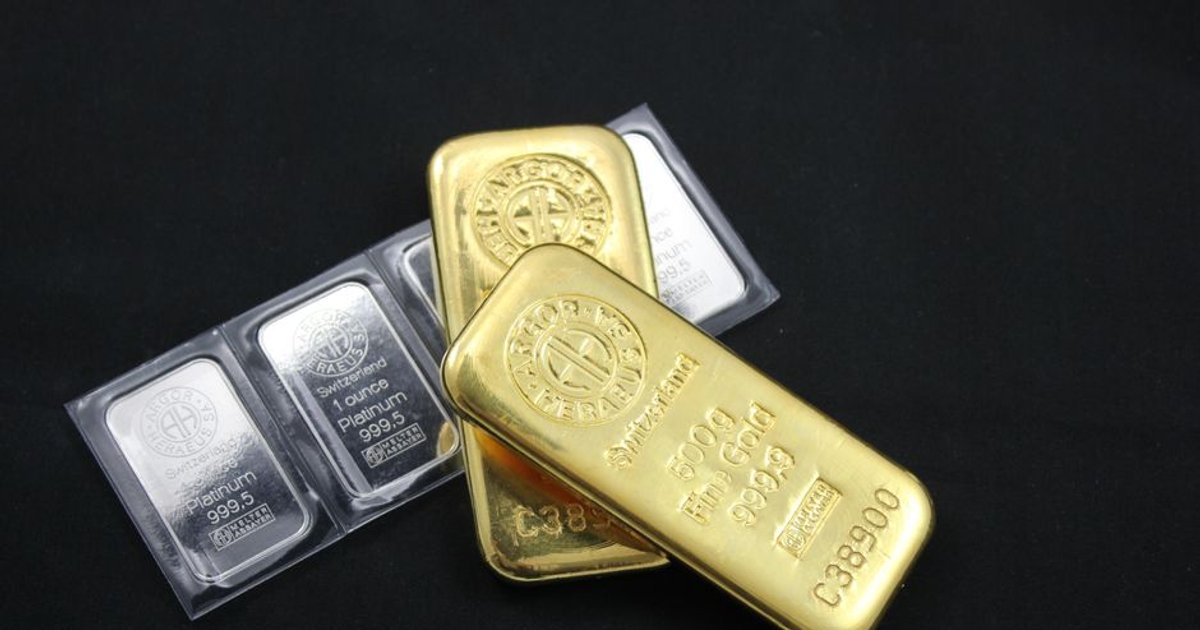
Gold Flows, Bottlenecks, and Opportunity: Navigating the Precious Metals Supply Chain for B2B Buyers
The precious-metals market of 2026 is not just a battleground of price and prestige; it is now a labyrinth of bottlenecks, geopolitical barriers, and operational recalibration. Once defined by stable flows from mines to refineries to coins and bars, the global trade in gold, silver, and platinum group metals faces unprecedented challenges. Driven by surging gold prices, shifting recycling patterns, and resource nationalism from key producing nations, the industry’s traditional playbook is being rewritten from the ground up. For buyers, traders, and procurement specialists dealing in physical goods, the crucible of refining capacity and regulatory complexity is now a critical operational concern, demanding new sourcing strategies, process reinventions, and compliance acumen.
Refining Capacity Squeeze: The New Bottleneck in the B2B Supply Chain
Historic pricing volatility is putting unique pressure on the world’s largest refiners. In the wake of the 2026 gold price surge, which saw international spot rates briefly exceed $4,250 per ounce, processing pipelines all but seized up. According to industry reporting, major Swiss and US players like Metalor and Heraeus were forced to restrict onboarding of new customers, while existing accounts saw up to a 40% increase in volumes. Refinery schedules stretched, and hundreds of commercial clients found themselves turned away, highlighting that capacity, not feedstock, has become the limiting factor.
This “refining bottleneck” changes the calculus for B2B gold buyers and traders. Where once the most important questions centered on price risk and purity, procurement teams must now consider refinery lead times, minimum shipment volumes, and the probability of onboarding delays. Notably, global gold recycling, a key feedstock for many industrial users, increased 5% in Q1 but contracted 6% in Q2 as prices softened, reflecting a capacity-constrained, price-sensitive pipeline that is far less elastic than in prior decades.
Resource Nationalism and Regulatory Barriers: Redrawing the Map for Sourcing and Shipping
Asia’s policy pivot is poised to shift longstanding patterns of trade and value addition. Indonesia’s announcement of up to 15% gold-export taxes threatens to reduce the volume of doré and semi-refined gold available to international refiners, particularly those in Switzerland and London. This complements a broader regional trend: Asian producers are investing in domestic refining capacity, seeking not only greater economic retention but also tighter control over where and how value is created.
For importers and wholesalers, this shift holds serious implications. Precious-metal goods can be classified under a variety of HS codes depending on stage, raw ores (e.g., 7108.12), unwrought bullion (7108.13), semi-manufactured forms (7108.20), and finished articles (7113.19). As producing nations push more material up the value chain before export, buyers must pivot sourcing not only based on cost per gram, but also VAT implications, local content rules, and country-of-origin restrictions. For example, a Hong Kong dealer importing coin blanks versus cast bars may face different duty rates, licensing requirements, and inspection protocols.
Key ports and routes are also in play. Major gateways like Singapore and London Heathrow remain dominant for high-security, high-value shipments, but increased scrutiny, export controls, and compliance checks, especially under OECD and LBMA Good Delivery frameworks, are slowing transit times. Forwarders and logistics brokers must now plan for longer dwell times at transshipment hubs, new documentation standards, and tighter insurance requirements, impacting both landed costs and inventory buffers.
Understanding Supply Chain Actors: Refiners, Mints, and the Value-Add Equation
Differentiated business models mean that not all major market participants serve the same roles in the supply chain. Metalor and Heraeus act as industrial backbone: their core value-add lies at the refining and semi-fabrication stage, transforming raw concentrates or recycled scrap into high-purity bars, blanks, and industrial forms. Both are Good Delivery accredited, a necessity for many institutional buyers and a baseline for market access in London and Zurich.
In contrast, The Royal Mint sits at the consumer and finished-goods end: it supplies investment bars, bullion coins, and legal-tender products to both governments and retail chains. For B2B buyers, this distinction shapes everything from minimum order quantities and incoterms (EXW vs. DDP) to licensing (import/export permits, VAT registrations) and negotiation leverage (e.g., batch pricing on semi-finished goods vs. finished coins).
Comparative summary:
- Metalor/Heraeus: Focus on refining, semi-fabrication, serve trade, electronics, and jewelry industries. Accreditations and compliance are key for B2B partners.
- Royal Mint: Emphasis on finished goods, high household brand recognition, less relevant for industrial buyers seeking raw or semi-manufactured metal.
Market Access, Compliance, and the “Trust Premium”
Increasing regulatory scrutiny is redrawing the boundaries of permissible trade. For commercial buyers, it is no longer enough to secure product at the right price, the ability to prove origin, chain-of-custody, and regulatory compliance is now a precondition of participation in major markets.
LBMA and LPPM Good Delivery standards set rigorous requirements for physical characteristics, provenance, and responsible sourcing, which are increasingly mirrored or enforced by customs authorities and large corporate buyers. Metalor’s recent London Platinum and Palladium Market accreditations exemplify the new threshold for institutional market access. This creates a “trust premium,” wherein suppliers with robust compliance credentials can command higher fees, faster onboarding, and preferred status in high-value tenders.
Moreover, anti-money laundering and know-your-customer (KYC) regulations have tightened onboarding for new trade partners. For importers, this can mean protracted vendor due diligence, background checks, and traceability protocols, ultimately extending procurement cycle times and requiring greater operational agility.
Procurement Strategies Amid Price Spikes and Tighter Working Capital
Margin dynamics in the refining segment are shifting. High gold prices reward those with access to scrap supply and processing power, as collection and authentication fees rise alongside spot values. For B2B buyers, this means that working-capital requirements are ballooning just as onboarding and processing delays increase.
Tactical shifts include:
- Securing advance refining slots with accredited refineries, even at premium pricing, to ensure timely conversion and delivery.
- Pre-arranging compliance documentation and third-party audits to minimize onboarding lag with new vendors or when expanding markets.
- Negotiating in-market buffer inventory rather than relying on “just-in-time” shipments, especially when dealing with higher-risk geographies or products subject to new export taxes.
- Careful review of Incoterms, switching from EXW or FCA to DAP or DDP where control of customs clearance or duty payment can reduce overall risk.
Comparative Perspectives: Global vs. Domestic, Value-Add vs. Raw
International buyers must balance shifts in raw-material supply with the changing tax and compliance regimes. While Asia’s resource nationalism nudges more gold through local refineries, European and American buyers may find themselves competing for semi-finished forms, incurring extra costs and lead times compared to previous years.
For regional sourcing offices, the impact reaches beyond mere landed cost: procurement teams must consider the cost structure at every value-add stage. For example, processing raw doré (7108.12) in Switzerland may require upfront payment of duties, insurance, and handling fees, while importing semi-finished bars (7108.20) from Singapore could offer tax rebates or streamlined customs, depending on trade agreements and local content provisions.
The choice between sourcing “at the mine,” “at the refiner,” or “at the mint” is no longer a static one; it must be revisited continuously as market access, VAT rates, and shipment clearances evolve within each port or trade bloc.
Licenses, Certifications, and Port Dynamics: The Practical Playbook
Licenses and import permits are increasingly non-negotiable for high-value shipments. Imports of gold and platinum-group metals into the EU and UK typically require Open General Import Licenses (OGIL) as well as advance notifications to customs on both departure and arrival. In Asia, importers to hubs like Hong Kong and Singapore face detailed manifest requirements and, in some cases, quota restrictions.
Certifications such as Good Delivery and Responsible Sourcing are now de facto prerequisites for clearing institutional buyers and accessing formal commodity exchanges. Without these, products may be discounted or embargoed by downstream clients, jeopardizing both margin and reputation.
Port choice and routing can materially affect timing and security. London Heathrow, Zurich, Singapore Changi, and Dubai International are the premier global nodes for precious metals, each with defined protocols for bonded storage, scanning, and customs clearance. Time-sensitive shipments must factor in security convoy schedules, local “gate in, gate out” cutoffs, and the availability of specialized armored transport firms. Even experienced buyers should expect minimum 48, 72 hour lead times for high-value clearances during peak volatility.
The winners in the next gold cycle will not be those who merely chase price or brand, but those who master regulatory agility, refine-to-market proximity, and operational resilience across ports, permits, and partners.
Forward-Looking Implications: The Road Ahead for B2B Gold Trade
Looking ahead, the golden rule for B2B procurement and trading teams is reorientation around multi-factor risk. Gone are the days of assuming uninterrupted pipeline flows and fungible supply. Instead, the new operating reality is defined by scarcity of refining capacity, regulatory patchwork, and the growing “trust premium” attached to accredited and compliant sources.
In this new paradigm, lead times and landed cost must be calculated not in days and dollars alone, but in terms of certification risk, port bottlenecks, and resource-nationalism taxes lurking at each node. The optimal sourcing model will likely be hybrid, securing long-term allocations with major, accredited refiners and mints, while retaining the agility to tap secondary or regional suppliers during demand spikes or geopolitical shocks.
Strategically, the differentiation will accrue to those who invest in compliance infrastructure, build diversified supply relationships, and retain operational buffer throughout the value chain. For those with vision, and a willingness to adapt, today’s turbulence is not a threat, but the prelude to a new era of supply chain advantage in precious metals.
Conclusion: Sourcing Smart, Shipping Smarter, The Gold Standard for B2B Trade
The convergence of elevated prices, refining bottlenecks, and shifting regulatory sands has redefined what it means to buy and move physical precious metals across borders. For B2B procurement teams, the imperative is clear: move upstream to secure refining relationships, build compliance capabilities that meet and exceed global norms, and rethink port and routing strategies in response to ever-tighter controls.
In practical terms, this means prioritizing long-term contracts with Good Delivery-certified refiners, maintaining contingency inventory in major trade hubs, and investing in end-to-end traceability and certification. Procurement leaders who internalize these lessons will not only navigate today’s constraints, but will define tomorrow’s standards for sourcing, shipping, and trading in the world of gold, silver, and platinum group metals. For those prepared, the next chapter of physical B2B trade in precious metals promises not just survival, but unprecedented strategic opportunity.