
ZUS Coffee Vs. Starbucks In Malaysia, Kuala Lumpur, Selangor & Southeast Asia: How Localization, Tech, And Pricing Ignite The 2025-2026 Coffee Chain Battle
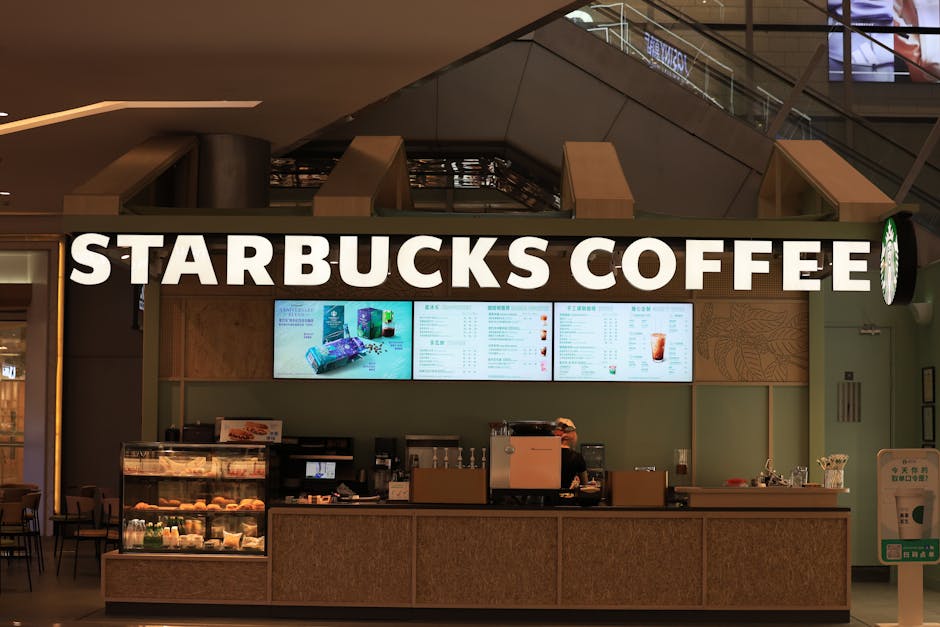
The Southeast Asian Coffee Wars: How ZUS Coffee and Starbucks are Redefining the Café Battle for 2025-2026
In the dynamic, caffeine-fueled heart of Southeast Asia, a seismic shift is underway. For years, American giant Starbucks defined the aspirational café experience, cloaked in global cachet and dependable brand consistency. But as the region’s middle class swelled and local tastes matured, a new wave emerged—one that understands not just coffee, but culture. At the center of this brewing competition stands Malaysia’s ZUS Coffee, a regional upstart that has stunned legacy players by racing past them in scale, speed, and local relevance.
This exposé delves deep into the strategies, market implications, and forward trajectories of ZUS Coffee and Starbucks, set against an arena where consumer expectations, technology, and price points are shifting beneath their feet. What happens here will reverberate far beyond drink menus, impacting business models, digital ecosystems, and the region’s wider consumer landscape.
The Dawn of a New Rivalry: Market Landscapes and Disruption Patterns
From Underdog to Overlord: The numbers are startling. By Q4 2025, ZUS Coffee boasted up to 1,000 regional outlets, with between 743–850 stores in its Malaysian heartland—towering over Starbucks’ 370 stores. ZUS’s ambitions are not confined by borders: its blueprint proposes a further 50 outlets in Thailand, 107 new Malaysian locations, 80 in the Philippines, and additional forays into Singapore by the close of 2026.
Starbucks: The Global Playbook, Cautiously Applied: In contrast, Starbucks moves with greater caution, expanding steadily but without the aggressive blitzscaling that is now synonymous with ZUS. While Starbucks retains premium brand equity, it’s rapidly ceding mass-market ground to a challenger that thrives on speed, adaptation, and affordability.
Price Becomes Power: The War for Everyday Coffee Loyalty
Democratizing Espresso: ZUS Coffee’s pricing levers are at the core of its disruption. With drinks priced an audacious 10–20% below Starbucks—sometimes as low as MYR2.99—it has magnetized the region’s price-sensitive urbanites. This is more than a coffee play; it’s a bet on everyday accessibility, echoing Chinese juggernaut Luckin Coffee’s model.
Market Share and Profitability: The results? ZUS seized a staggering 21% of the Malaysian market, posting RM204 million in revenue and RM10.2 million in net profit over just ten months in 2023. Starbucks, while still dominating the premium sphere, faces a new reality: value is no longer synonymous with luxury, but with convenience and inclusivity.
Tech Transformation: Digital Ecosystems as Growth Engines
ZUS’s Digital Flywheel: The future of coffee retail is personal—and digital. ZUS Coffee’s app now drives a remarkable 70% of its sales, offering features such as pre-ordering, rewards, and behavioral tracking. This data-driven approach powers its hybrid store and kiosk format, ensuring ubiquity even in traditionally underserved locations.
The Starbucks Counteroffensive: Starbucks’s answer is Deep Brew AI—a sophisticated global recommendation and supply chain engine. While ZUS leads in local speed and customer touchpoints, Starbucks wields deeper global data and predictive analytics. Early pilots of Deep Brew in 2025 cut inventory stockouts by 20–30% and yielded a 15% reduction in operational costs, with plans underway to scale these gains in Southeast Asia.
Localization: The Secret Sauce for Sustained Advantage
Culture as Core Competence: ZUS’s most potent weapon may not be its app or price, but its mastery of local nuance. From halal-certified menus to palm sugar-infused beverages and continuous community-driven product feedback, its “hyperlocal” model has captured consumer trust in ways that Starbucks’ standardized global offering cannot match.
Funding and Scalability: With RM250 million in funding, ZUS can afford to double down on its localization strategy—outpacing rivals who must reconcile global brand governance with on-the-ground realities. In a region where food and beverage choices are deeply interwoven with identity, this creates nearly unassailable defensibility.
Comparative Perspectives: New Entrants and the Expanding Value Battlefield
Gigi Coffee—The Millennial Challenger: Hot on ZUS’s heels, Gigi Coffee targets Malaysia’s tech-savvy millennials. Growing from 36 to 160 outlets in a single year and posting RM4 million in net profit for 2023, it leverages digital platforms and affordable specialty offerings to chip away at both ZUS and Starbucks, especially in the low per capita coffee context of Malaysia.
Luckin Coffee—The Disruptor’s Disruptor: Meanwhile, China’s Luckin Coffee is set to intensify the price war, aiming for 200 stores in Malaysia by 2027 with relentless automation and rock-bottom MYR2.99 price tags. For ZUS and Starbucks, this means not just competition, but the looming risk of margin erosion and a hard reset in consumer expectations.
Strategic Tactics: Innovation, Efficiency, and the Race for Relevance
Bespoke Experiences vs. Algorithmic Efficiency: The front of house is ZUS’s kingdom—driven by app-based ordering, rapid fulfillment, and hyperlocal menu experiments. In contrast, Starbucks is fortifying its back end, using Deep Brew AI to optimize everything from inventory to labor schedules. The two models embody diverging visions: one chases local intimacy and velocity, the other, global efficiency and data depth.
Mental Market Share: ZUS has successfully shifted the conversation from “third place” lifestyle indulgence to “everyday affordable luxury,” a playbook reminiscent of China’s Luckin but with a distinctly Southeast Asian soul. Yet, Starbucks’ entrenched brand equity—anchored in aspirational experiences and premium positioning—remains formidable, especially among higher-income segments and international urbanites.
Forward-Looking Insight
“Local relevancy, powered by technology and price accessibility, is no longer a niche play—it is setting the standard. The brands that can continuously blend digital intelligence with hyperlocal empathy will define the next decade of Southeast Asia’s café culture.”
Real-World Implications: What This Means for Consumers, Competitors, and Investors
For Consumers: The beneficiary is clear—the coffee drinker. Never before have urban Malaysians and their regional neighbors enjoyed such a diversity of price points, flavors, store formats, and digital enhancements. Halal options, innovative sugar alternatives, personalized rewards, and localized taste profiles are now table stakes—not differentiators.
For Competitors: The market is now a cauldron of innovation—and attrition. Smaller chains and independent players must decide: double down on niche and hyperlocal play, or risk being outspent and outpaced as ZUS, Gigi, and Luckin escalate the arms race.
For Investors: The café sector in Southeast Asia is no longer a slow boil but a pressure cooker primed for rapid value creation—and destruction. As ZUS gears for IPO rumors and Starbucks recalibrates its Asia strategy, smart money will flow toward platforms that can outmaneuver on tech, price, and cultural resonance.
Conclusion: The Next Chapter of the Coffee Chain Revolution
The Southeast Asian coffee battle is no longer a story of East meets West—it is a multidirectional contest where agility, digital mastery, and cultural authenticity determine winners. ZUS Coffee’s meteoric rise has changed the calculus, forcing Starbucks to rethink its global-local balance, and inviting Gigi, Luckin, and others to redefine what a café means in the 2020s and beyond.
Looking ahead, the ultimate victor will not simply be the chain with the most outlets or the flashiest app. In a region as complex and diverse as Southeast Asia, sustained success will hinge on the fusion of technological innovation with deep-seated local understanding—what ZUS has so far executed with flair, but which Starbucks and new rivals are desperate to reclaim. For every brand in this arena, the mandate is clear: adapt—or risk irrelevance.
The Southeast Asian café landscape is being rewritten, one localized, digitally powered, and price-savvy cup at a time. The only constant, as the next wave unfolds, will be change.
Sources: GrowthHQ, AInvest, Marketing-Interactive, GrowthHQ: Tech Partnerships.